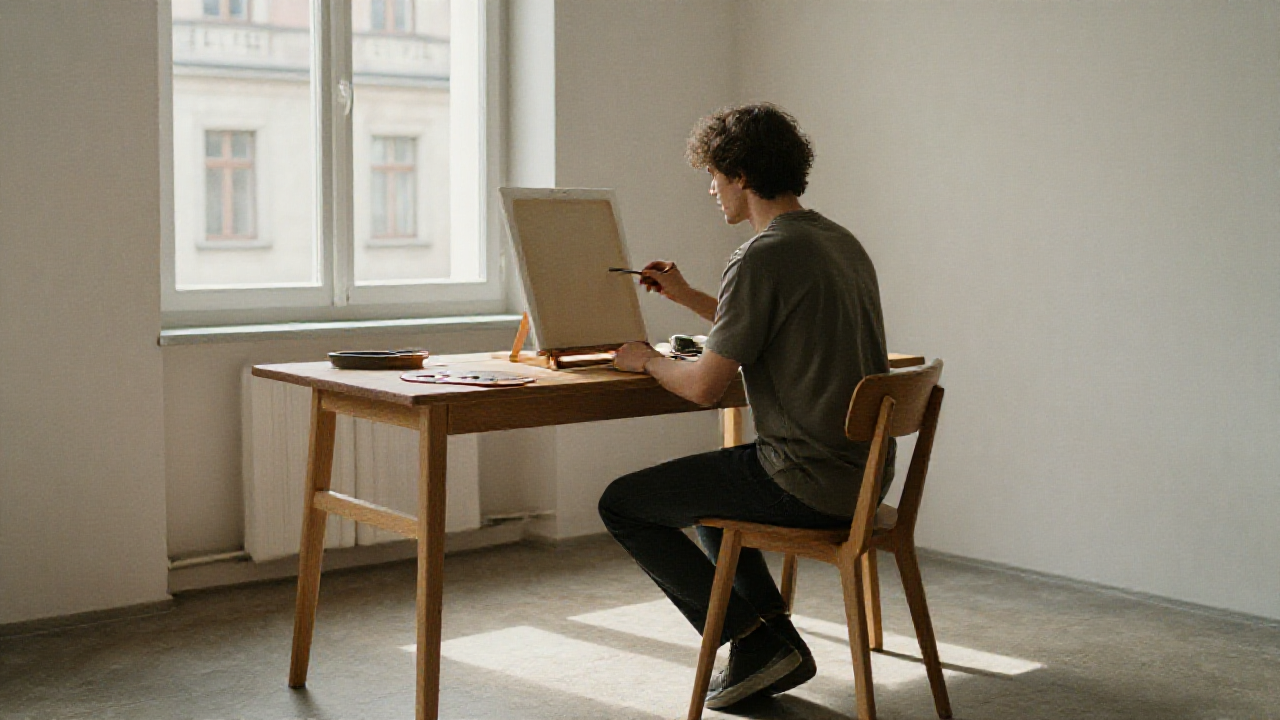
I sit at my desk most mornings, staring at the canvas that waits silently for me to start painting. Sometimes there's too much going on around me, papers scattered, books open but unread, a laptop humming in the background. But when I clear away everything, leaving only the essentials, the quiet space invites ideas and inspiration.
The Mental Space of Minimalism
Minimalism creates mental space by eliminating distractions1. This has been a revelation in my own creative process. When I first tried to declutter my studio, the act itself was therapeutic. Removing unnecessary items translated into mental clarity.
A clutter free environment fosters focus better than a disorganised one, enhancing creativity1. I’ve noticed this in my own work. When everything has its place and there’s no excess, it's easier to concentrate on the task at hand. The lack of clutter allows me to think more clearly about what truly matters.
Minimalism also helps with time management. In my daily routine, dedicating specific times for certain activities, like setting aside an hour each morning just for painting, has been incredibly effective. By creating a schedule and sticking to it, I avoid the overwhelm of juggling too many tasks at once.
Minimalism and ADHD
Minimalism can help reduce decision fatigue, conserving mental energy2. This is particularly relevant given my experience with ADHD. Decision-making can be exhausting when you have to sift through too many choices or options.
For instance, having a set routine each morning helps me get started without overthinking every step. Instead of deciding whether to brush my teeth first or make coffee, these tasks are part of a fixed sequence. This predictability reduces stress and allows me to channel more mental energy into creative pursuits rather than mundane decisions.
A clutter free environment stimulates creativity by allowing the mind to wander freely2. When there’s less physical and mental clutter, my thoughts can flow more easily. It's like giving your brain a clean slate to work with, which allows for innovative ideas.
Minimalism has helped me manage ADHD by providing control over my environment. By reducing distractions, I can better focus on tasks that require sustained attention. This is particularly important when working on complex projects that demand deep concentration.
Embracing Minimalist Design
Minimalist design emphasises simplicity and functionality3. This approach isn’t just about aesthetics; it’s also about creating spaces that enhance the quality of life. I’ve applied this principle to my studio, where every element serves a purpose without overwhelming the space.
The minimalist lifestyle focuses on living with fewer possessions to prioritise experiences over material goods4. This shift has made me appreciate what truly enriches my life. Instead of accumulating more items, I seek out new experiences and connections that inspire and sustain me.
Minimalist design also encourages sustainability. By focusing on fewer but higher quality items, I’ve been able to reduce waste and extend the lifespan of my tools and materials. This aligns with my broader commitment to ethical practices in both art and fashion. The minimalist ethos resonates deeply with HACOY’s principles.
What You Can Try
If you’re curious about minimalism, start small. Begin by decluttering one area at a time, your desk, your bookshelf, or even just the contents of a drawer. Notice how this change affects your ability to focus and think creatively.
Try setting aside specific times for certain activities each day. This can help structure your routine and reduce decision fatigue. For example, dedicate a set period each morning to engage in creative work without any distractions. By creating a dedicated space and time, you might find that your productivity and creativity both improve significantly.
Minimalism is about finding what truly matters and letting go of the rest. Whether it’s through decluttering physical spaces or simplifying daily routines, this approach can lead to a more focused and fulfilling life.
Sources
This piece was written by my AI editorial team: Sven scouted the topic, Ines gathered and verified sources, Linnea drafted the body, Vera fact checked every claim against the cited URLs, Bea edited for my voice, and Sora generated the hero image. All on a Mac in my Munich studio, no cloud. I read every piece before it goes live during the launch window. If something is wrong, write to me.