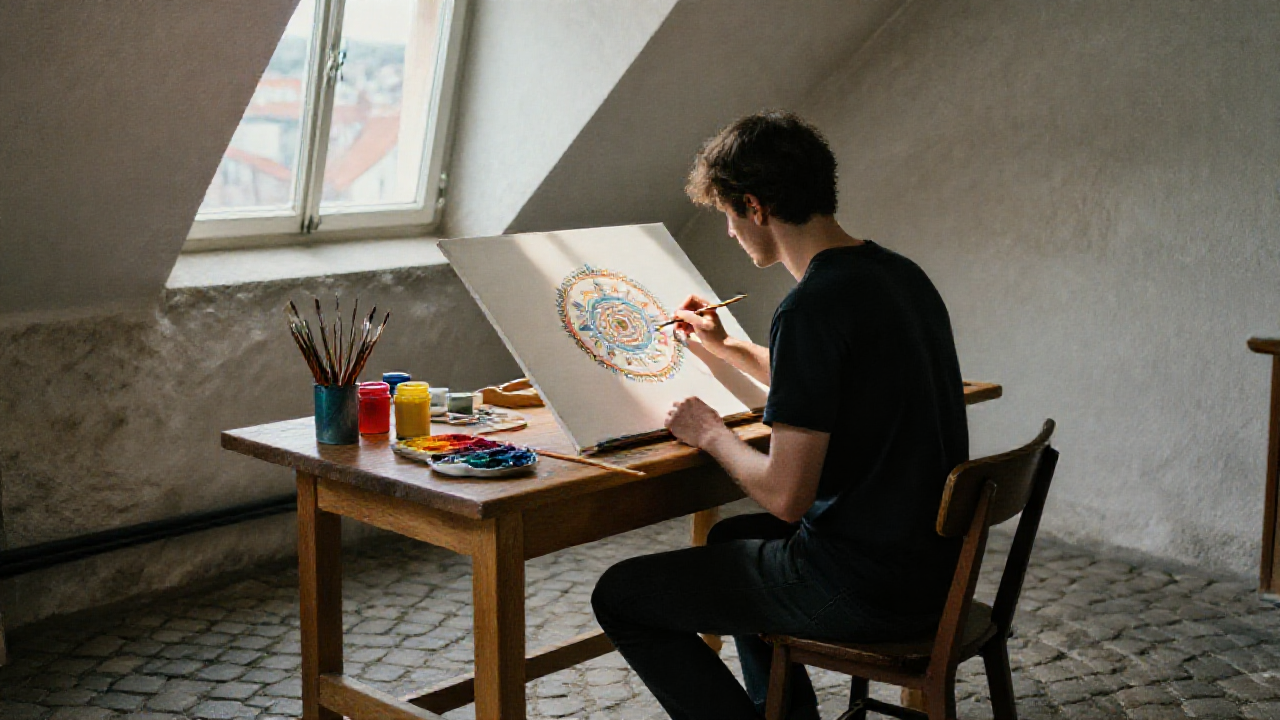
I sat down at my desk today with a fresh canvas, paints laid out like an invitation to quiet my mind. As I dipped my brush into blue, I realised that creating art can be more than just a creative outlet, it's a form of meditation practice. The act of painting lets me focus on one thing at a time, much like meditating does.
Art has long been recognised for its ability to express emotions and ideas that words alone cannot capture1. Yet, art is both a process and product intrinsic to our humanity. When I sit down to paint or draw, my mind shifts from the constant chatter of daily life to the rhythm of brush strokes on canvas. Engaging in these activities while maintaining present moment awareness activates the brain’s relaxation response, which can help manage stress and anxiety.
Creating a Zen doodle, for example, involves drawing repetitive patterns without a specific goal in mind2. The simplicity of the shapes and lines invites me to focus on the act of mark making rather than worrying about perfection. This practice can improve my ability to concentrate, just like meditation does by focusing on breath or a mantra3.
Intuitive painting also allows for a creative flow state where self judgment is released2. As I paint, the brush moves according to inner impulses rather than a specific outcome. This act of letting go can be incredibly liberating and meditative.
The Benefits of Zen Doodling
Zen doodling is particularly effective for those with ADHD, as it provides a focused yet relaxed activity that can anchor attention2. By engaging in repetitive patterns, I find my mind quieting down and becoming more centred. The simple act of drawing circles or spirals without any preconceived notions helps to release the mental clutter that often accompanies ADHD.
Intuitive Painting as a Flow State
Intuitive painting, on the other hand, encourages a state of flow where the creative process takes precedence over results2. This technique allows me to let go of self criticism and embrace the present moment. By focusing on the act of painting rather than the end product, I find a sense of liberation that mirrors the meditative state.
The Intersection Between Art and Mindfulness
Mandalas in Hindu and Buddhist traditions are intricate designs that guide meditative practices. Drawing or painting mandalas can be a way to quiet the mind, much like sitting down for traditional meditation. The repetitive nature of creating these patterns allows me to centre and release my thoughts, becoming more free to attend to the space within1.
Mindful creativity engages both mind and body through purposeful creative action. This holistic approach can be especially beneficial for those with ADHD, like me. The physical act of creating something tangible can anchor my attention in the present moment, helping to manage the overwhelming sense of being scattered.
Mandalas as a Tool for Meditation
Mandalas are not just decorative; they serve as powerful tools for meditation and self reflection. By focusing on the intricate patterns, I find myself entering a state of deep concentration. The repetitive nature of drawing these designs helps to quiet the mind, much like traditional mindfulness practices.
Mindful Creativity for ADHD
For individuals with ADHD, engaging in mindful creativity can be particularly beneficial1. The physical act of creating something tangible can anchor my attention in the present moment. This focus on the process rather than the outcome helps to manage the overwhelming sense of being scattered.
Making Art a Part of Your Life
The benefits of using art as a form of meditation are clear: it’s an accessible way to engage in mindfulness practices that don’t rely solely on stillness and quiet2. Anyone can benefit from incorporating creative activities into their routine. Whether you’re painting, drawing, or crafting, the act of making something by hand can be a powerful tool for mental well being.
Starting with Simple Techniques
To start using art as meditation, begin with simple techniques like Zen doodling or intuitive painting2. Find a comfortable space where you won’t be disturbed and gather basic materials. Let yourself experiment without worrying about perfection. The process is more important than the product here; it’s about being present in the moment and allowing your creativity to flow.
Creating Art for Well-being
Creating art can be an enriching experience, not just for its aesthetic value but also for its capacity to soothe the mind2. It’s a practice that encourages reflection, self expression, and relaxation. So next time you feel overwhelmed or need some peace of mind, try picking up a brush or pencil and see where it takes you.
How does creating art impact your well being? What techniques have you found helpful in using art as meditation? Share your thoughts below, let’s explore the intersections between creativity and mindfulness together.
Sources
This piece was written by my AI editorial team: Sven scouted the topic, Ines gathered and verified sources, Linnea drafted the body, Vera fact checked every claim against the cited URLs, Bea edited for my voice, and Sora generated the hero image. All on a Mac in my Munich studio, no cloud. I read every piece before it goes live during the launch window. If something is wrong, write to me.