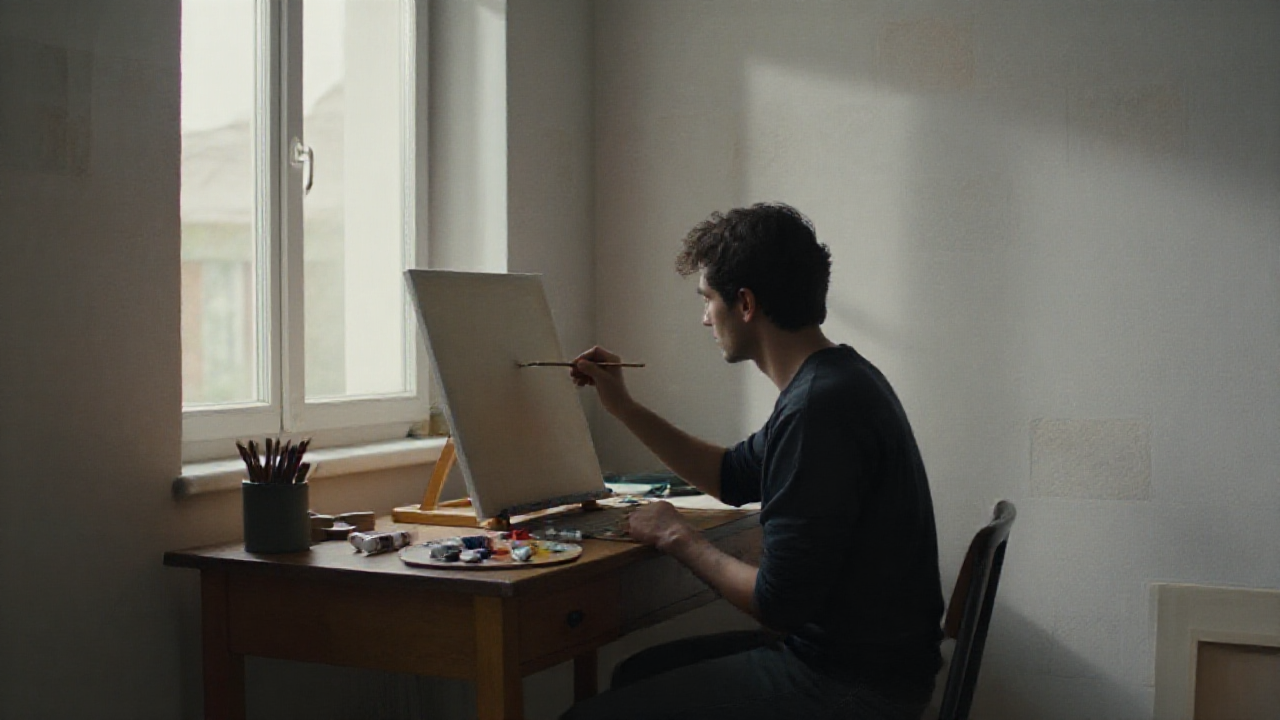
Image made by AI
I sit at my desk most mornings and the canvas waits, a blank slate ready for whatever I paint today. The silence of the studio envelops me as I pick up my brush, dip it in colour, and let the first stroke fall onto the white surface. Each movement is deliberate, each choice of hue thoughtful. In this moment, nothing else exists but the canvas and me. This is art as meditation, a practice that brings calm to both body and mind.
Art as Meditation
Creating art can be a form of meditation, bringing artists into the present moment with each brush stroke or choice of colour1. For many, including myself, the act of creating is not just about making something visually appealing but also about finding peace and focus. The repetitive motion of painting, the careful selection of colours, and the sensory engagement with materials all contribute to a state of mindfulness that can be profoundly soothing.
The process of art making allows for an escape from daily stresses. It’s a chance to step away from the noise and chaos of life and immerse oneself in something tangible and personal. Each stroke on the canvas becomes a moment of presence, where thoughts are channelled into creating rather than worrying or overthinking. This meditative state is not only beneficial for mental well being but also enhances creativity by allowing ideas to flow freely without judgment.
Scientific Support for Art-Making
Research at Drexel University found that making art reduces stress hormones2. Engaging in creative activities like painting or drawing helps individuals access a quiet level of focus, transforming negative cycles into moments of tranquility. This is not just about the end product but the process itself; each decision made during creation serves as an anchor to the present moment.
The act of creating art can be seen as active meditation where one focuses on the task at hand rather than wandering thoughts or anxieties. The repetitive nature of painting, for instance, mimics rhythmic breathing exercises used in traditional meditation practices, providing similar benefits such as reduced heart rate and lower levels of cortisol, the stress hormone.
Techniques for Mindful Art-Making
One technique for using art as a tool for mindfulness involves abstract expressionist painting2. Abstract work allows for personal choices and sensory engagement, enhancing its calming effects. With every brush stroke, you can feel how the paint moves and follow its lead, letting your subconscious guide the creation. This form of art is not just about creating a visual masterpiece but also about allowing yourself to explore and express without restraint.
Another method involves using watercolour paints3. The fluidity of watercolours encourages a sense of calm as colours gently spread and mix on the paper. Watching pigments blend into new hues can be mesmerising, offering a meditative experience that is both relaxing and rewarding. Each stroke leaves behind a trail of colour that reflects your mood and state of mind at that exact moment.
Coloured pencils also offer a calming way to create detailed artwork with more control3. The precision required for working with coloured pencils can be grounding, as it demands focus and patience. This medium allows you to slow down and take your time, making each mark deliberate and meaningful. Whether you're shading a smooth gradient or creating intricate patterns, the act of using coloured pencils can be a form of meditation in itself.
Accessibility of Art-Making
Can anyone benefit from this approach? Absolutely. Art-making is not just for professional artists; it's for everyone who wants to find calm in their daily lives2. The beauty of art as meditation lies in its accessibility and personalisation. You don't need to be an expert painter or drawer; you simply need a willingness to explore your creativity and engage with the process.
The simplicity of materials required for mindful art making makes it accessible to anyone, regardless of skill level or background. Whether it's picking up a pencil and some paper or grabbing a few watercolour paints, the entry barrier is low. The focus should be on enjoying the process rather than achieving perfection. This mindset shift can transform how you view both your artwork and daily life.
If you're looking for a way to unwind, consider picking up some paints or pencils and giving it a try. Let the act of creating guide you into a state of mindfulness. The canvas or paper is there to receive whatever you choose to put on them, offering an opportunity to express yourself freely and find peace in the present moment.
Sources
Written by AI on my own computers in Munich, not in the cloud.
It draws on public sources found by web search.
The image was made by AI on my own computers too.
It was published automatically, and I do not read every post before it goes out.