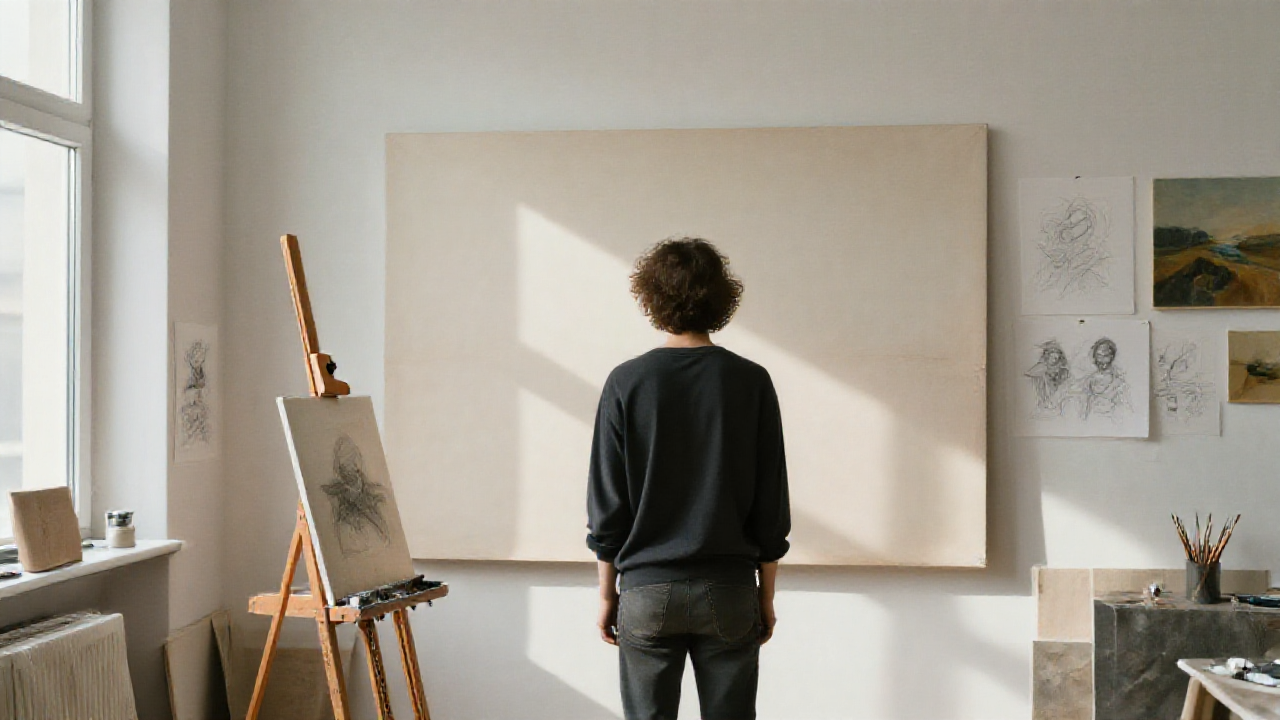
Image made by AI
Lede Paragraph
I sat down at my easel, surrounded by the familiar scent of linseed oil and the soft hum of my quiet Munich studio. The canvas before me was blank, as always, yet today felt different. I had been thinking a lot about algorithms, how they shape our creative lives and whether they truly serve us or if we’re just chasing validation like moths to a flame. This morning, I decided to take a break from Instagram, a platform that often left me feeling drained.
What Does It Mean to Create Without Seeking Likes or Shares?
It’s easy to get caught up in the numbers game, likes, comments, shares. The algorithm is a siren song, promising instant gratification and validation1. But lately, it feels suffocating. The pressure to post something that will go viral has become overwhelming. I’ve felt this pressure too; I remember the days when every painting had to be perfect for Instagram. But now, I find myself asking: what is the true value of these likes? Are they a genuine measure of success or just fleeting validation?
The algorithm often rewards flashy, polished work that fits neatly into trending categories1. This can create a cycle where artists are constantly trying to predict what will go viral next. However, this pressure has led me to question whether my art is truly meaningful if it’s only appreciated for its surface level appeal. I stopped using Instagram for a while and noticed something remarkable: my joy returned. Instead of chasing views, I focused on the act of creating itself.
I started journaling about my process, documenting each stroke and layer. It was liberating to create without the constant fear of missing out (FOMO). This shift allowed me to reconnect with the intrinsic joy in art making. I realized that true value lies not in likes or shares but in the act of creation itself. My paintings began to feel more authentic, and my work started to resonate on a deeper level.
How Can Artists Find Value in Traditional Methods of Sharing Work?
Traditional methods of sharing work, like exhibitions, galleries, or even just hanging your art in a studio space, are invaluable2. They provide a tangible sense of accomplishment and allow for direct interaction with others who appreciate your craft. I’ve started hosting small events where people can come see my paintings up close. There’s something special about seeing someone’s face light up when they discover the depth behind a piece.
For instance, during one such event at a local café, I set up some of my recent work on easels2. People would walk in and stop to look, often asking questions about my process or techniques. One woman even commented that she could see the story behind each painting. This interaction was rewarding because it felt genuine, people were engaging with my art for its own sake rather than just as a digital image.
Hosting these events has also helped me build a community around my work2. I’ve met other artists, writers, and enthusiasts who share similar interests. These connections have enriched my creative practice and provided support during challenging times. The tactile nature of these interactions is something that algorithms cannot replicate; there’s an authenticity to seeing your art in person that digital views can’t match.
Why Is the Algorithm Not Always a Reliable Measure of Success?
The algorithm often rewards flashy, polished work that fits neatly into trending categories2. But I’ve realized that true value lies in authenticity and process. Art trends are shifting towards pieces that carry more evidence of the creative journey2. Techniques like impasto or the tactile craft movement are gaining popularity because they offer a raw, honest look at the human hand behind the brush.
Impasto, for example, involves applying paint thickly to create texture and depth2. This technique requires patience and attention to detail, which can be lost in the fast paced world of social media. When I started experimenting with impasto, it felt like a return to my roots as an artist2. The process was meditative, allowing me to focus on each layer without worrying about how it would look online.
Moreover, traditional methods allow for more experimentation and playfulness. There’s no pressure to adhere to strict guidelines or trends; you can just let your creativity flow2. This freedom is something that the algorithm often stifles. It encourages conformity and predictability, which can be limiting for artists who want to explore new ideas and techniques.
Suggesting What the Reader Could Try
If you’re feeling suffocated by algorithms and the need for constant validation, consider taking some time to reconnect with your intrinsic joy in art1. Set aside external pressures and focus on creating work that resonates with you personally. Maybe host a small event or exhibition where people can experience your art up close2. And don’t forget, the tactile craft movement is here, give impasto a try; it might just bring back some of that long lost passion.
Sources
Written by AI on my own computers in Munich, not in the cloud.
It draws on public sources found by web search.
The image was made by AI on my own computers too.
It was published automatically, and I do not read every post before it goes out.