
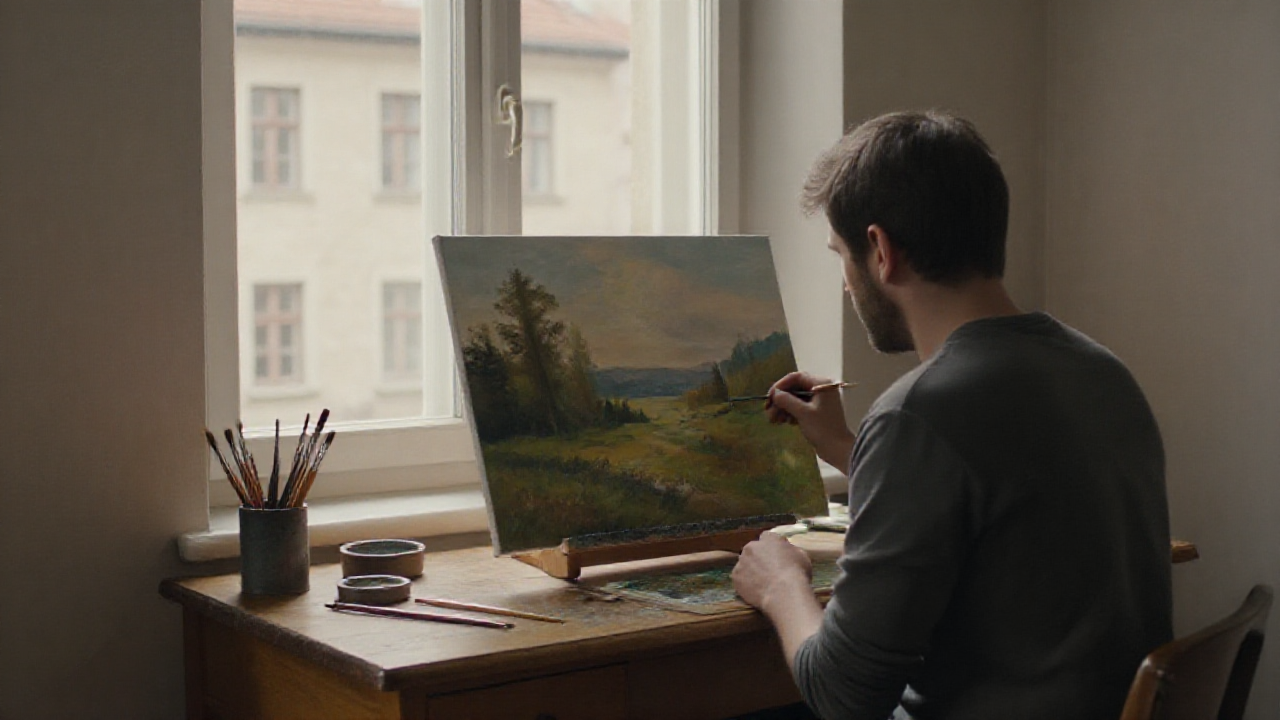
Image made by AI
I sit at my desk most mornings and the canvas waits, a silent whisper in the corner of my studio. Today, I find myself grappling with the whirlwind of thoughts that swirl around me like autumn leaves caught in a sudden gust. It’s these moments when I realize how much my ADHD plays a role in both my daily struggles and creative pursuits.
How Does Art Help With ADHD?
Art therapy is seen as a valuable tool for managing ADHD symptoms, offering a creative outlet. When I was first diagnosed with ADHD, the idea of sitting still long enough to paint seemed like an impossible task. But over time, I’ve come to see my painting practice not just as a hobby but as a necessity. Engaging in art provides a productive way to channel energy and emotions, while also fostering relaxation and fulfillment.
According to [Cindy Baker]1, the way your brain works can be an asset instead of a liability, especially when it comes to creativity. My own experience mirrors this; I find that my mind, often racing with ideas and questions, finds a natural rhythm in painting. The act of creating allows me to channel those impulses into something tangible and meaningful.
Moreover, art provides a structured yet flexible framework for self expression. Each stroke on the canvas represents an opportunity to explore and experiment, which can be incredibly liberating for someone who often feels constrained by traditional structures. As [Cindy Baker]1 emphasizes, the key is to find a creative practice that resonates with your unique needs and preferences. For me, painting fills this role perfectly.
What Are Some Practical Ways to Integrate Art into Daily Life?
Integrating art into daily life is easier than one might think. For me, starting the day with a quick sketch or colouring in my journal helps set a calm tone for the rest of the morning. During breaks at work, I might spend five minutes doodling or painting small details on my laptop screen, anything to engage my hands and mind in a focused activity. These moments are not just about creating; they’re about grounding myself, bringing clarity to my thoughts, and finding that sweet spot where impulsivity becomes creativity.
One of the key benefits of integrating art into daily life is the sense of accomplishment it brings. After a few hours spent painting, I often feel more centered and less overwhelmed by tasks. This isn’t just an anecdotal observation; research supports this notion. As [Cindy Baker]1 points out, creative activities can help build and maintain self esteem by providing a tangible sense of achievement. For instance, completing even the smallest piece of art can be a powerful affirmation that I am capable and productive.
Another practical way to integrate art is through mindful practices like colouring books or simple drawing exercises. These activities require focus and concentration without being overly demanding. They serve as mini breaks from the constant stream of thoughts that often distract me, allowing me to return to tasks with renewed energy and clarity.
Can You Share Your Personal Experience with Using Art for Focus?
My journey with ADHD has been a winding road, filled with both struggles and triumphs. One particular painting project stands out as a pivotal moment. It was during a particularly challenging period when my mind felt scattered and unfocused. I decided to take up a large scale landscape painting, something that required patience and concentration. As I mixed colours and applied them layer by layer, I began to notice a shift in my state of mind. The act of painting became meditative; each stroke brought me back to the present moment.
This experience taught me that art is not just an escape but a tool for managing my ADHD symptoms. It’s about finding that balance between the chaos and the calm, where creativity thrives. Painting has become a daily ritual, a way to connect with myself and find focus amidst the noise. As [Nancy from Detroit]2 once said, “Painting and unusual expressions are essential to me.” For me, it’s not just about making art; it’s about living a more balanced life.
Suggesting What the Reader Could Try
If you’re reading this and thinking, "Maybe I could use painting or another creative outlet to help with my ADHD," give it a try. Start small, perhaps five minutes of doodling or sketching during your breaks. The key is consistency; even short bursts of creativity can make a difference over time. And remember, the goal isn’t just to produce perfect pieces but to engage in the process and find that sense of calm and focus.
Art has become an integral part of my daily life, offering a space where I can explore, experiment, and grow. It’s not always easy, but it’s worth it. So, next time you feel overwhelmed, consider picking up a paintbrush or pencil. You might just find the peace and clarity you need.
Sources
Written by AI on my own computers in Munich, not in the cloud.
It draws on public sources found by web search.
The image was made by AI on my own computers too.
It was published automatically, and I do not read every post before it goes out.