ADHD and Productivity: A Founder's Journey to Sustainable Workflows
18 September 2026
I was supposed to start my day early, but here I am at noon, staring out the window of my Munich studio. The sun is bright and the world seems to be moving without me. This feeling of drift, guilt, panic is all too familiar.
A few months ago, I found a way to manage this cycle more effectively. Building external systems to carry the load of working memory, task initiation, and time sense can help mitigate feelings of drift, guilt, panic, and exhaustion. I started using a digital calendar and a visual task board. At first, it felt like just another thing to remember, but soon enough, these tools became my lifelines.
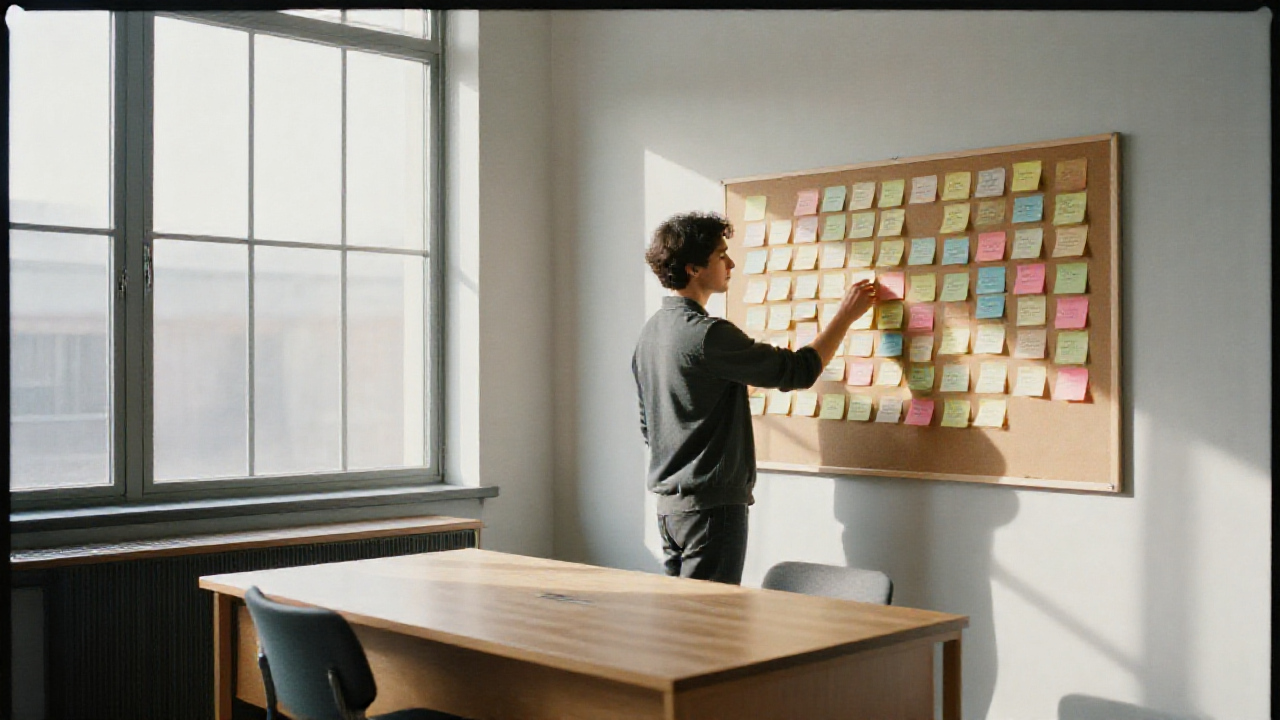
Visual processing over text based lists helps manage the chaos of running a business by reducing anxiety about forgetting something important. When I see tasks laid out visually, it’s like seeing the world in sharper focus. The words on paper no longer overwhelm me; instead, they guide me towards what needs to be done next. This shift has been transformative for my workflow.
Flexibility in systems allows for adjustments when unexpected events disrupt schedules, preventing derailing of entire days. I can’t predict every challenge that comes my way, but I’ve learned to build a system that bends without snapping. When life throws a curveball, like an urgent client email or a sudden meeting request, I don’t have to panic. Instead, I can make room for the unexpected and keep moving forward.
Finding the right balance between structure and flexibility is key. Too much rigidity leads to frustration when plans go awry; too little leaves me feeling lost and overwhelmed. Over time, I’ve found that a hybrid approach works best: a digital calendar for recurring tasks and deadlines, coupled with a visual task board for daily priorities.
The visual task board is particularly effective because it allows me to see all my tasks at once without the need to flip through pages or scroll down long lists. Each task has a physical presence on the board, which makes it easier to prioritise and tackle one by one. This tactile connection with my work helps anchor my focus and prevents mental fog.
Another aspect of external systems is leveraging technology to automate repetitive tasks. Tools like IFTTT can be invaluable for setting up triggers that automatically update my task board or calendar when new emails arrive, meetings are scheduled, or deadlines approach. These automations reduce cognitive load and free up mental energy for more complex problem solving.
Consistency is key. Just as a painter needs to return to their canvas daily to make progress on a piece, I need to consistently update my calendar and task board to keep my workflow moving forward. Even small moments of neglect can snowball into larger issues if left unchecked. By treating these tools like essential parts of my creative process, I’m able to maintain momentum and stay aligned with my goals.
Mindfulness practices are another crucial part of my toolkit. Early on in my journey with ADHD, I was sceptical about meditation and breathing exercises. They seemed too simple, almost like a gimmick. But as I continued to struggle with focus and anxiety, I gave mindfulness a chance. It turns out that these practices can be incredibly effective for managing the symptoms of ADHD.
Mindfulness helps me stay present and engaged in the moment. When my mind starts to wander or when I’m overwhelmed by tasks, taking a few deep breaths and focusing on my breath can bring me back to centre. This practice doesn’t make the challenges go away, but it helps me approach them with more clarity and less anxiety. Over time, I’ve noticed that regular mindfulness sessions have improved my ability to maintain focus throughout the day.
Another aspect of mindfulness for me is the act of pausing before reacting. In a startup environment, there’s always something urgent demanding attention. But taking a moment to pause, whether it’s stepping away from my desk or simply closing my eyes and breathing deeply, can make all the difference. It allows me to assess the situation more clearly and respond in a way that aligns with my goals rather than just reacting out of habit.
Mindfulness also helps me cultivate self compassion, which is crucial for someone like me who often struggles with self criticism. When I notice negative thoughts creeping in, mindfulness practices remind me to treat myself with the same kindness and understanding I would offer a friend. This shift in perspective can be incredibly powerful in reducing stress and improving overall well being.
Incorporating mindfulness into my daily routine has also led to unexpected benefits. For example, when I’m feeling overwhelmed by a project or facing a difficult decision, taking time for meditation helps me approach the situation with greater clarity and calmness. This mental shift can often lead to more creative solutions and better outcomes.
Ultimately, what matters most is recognising that there’s no single solution for everyone with ADHD. The key is to keep experimenting until you find what works best for you. High intelligence, verbal speed, and crisis performance can mask ADHD for years before these coping mechanisms fail. It’s only when the usual strategies no longer suffice that it becomes clear how much support is needed. For me, a combination of external systems and mindfulness practices has made all the difference.
Finding the right tools and techniques is crucial for maintaining workflow sustainability. For me, a combination of digital calendars, visual task boards, and mindfulness practices has been effective. But these are not one size-fits all solutions; what works for someone else might not work for you. The key is to experiment until you find the right mix.
One tool that I’ve found particularly helpful is RescueTime, which tracks how much time I spend on different activities throughout the day. This data has been invaluable in identifying patterns and areas where I might be wasting too much time or not focusing enough. It’s a powerful way to hold myself accountable without feeling overwhelmed by the numbers.
Another technique that works well for me is breaking tasks into small, manageable chunks. Rather than looking at an overwhelming list of things to do, I focus on one tiny step at a time. This approach makes it easier to start and maintain momentum throughout the day. It’s like taking a series of small steps rather than trying to leap over a high wall.
One challenge with breaking tasks into small pieces is finding the right balance between granularity and efficiency. If tasks are too granular, they can become tedious and lose their impact; if they’re not broken down enough, I might feel overwhelmed by the scale of what needs doing. Over time, I’ve learned to strike a balance that keeps me motivated without overwhelming my sense of purpose.
Another tool that has been instrumental in managing my workflow is Trello. This platform allows me to visualise and organise tasks across different projects, making it easier to see the big picture while also focusing on specific details. The ability to move cards around and reorganise them as needed helps keep everything organised without feeling rigid or inflexible.
Ultimately, what matters most is recognising that there’s no single solution for everyone with ADHD. The key is to keep experimenting until you find what works best for you. High intelligence, verbal speed, and crisis performance can mask ADHD for years before these coping mechanisms fail. It’s only when the usual strategies no longer suffice that it becomes clear how much support is needed. For me, a combination of external systems and mindfulness practices has made all the difference.
If you’re looking to enhance your focus and efficiency as an ADHD founder, start by building one or two external systems today. Maybe set up a digital calendar and visual task board for your daily tasks. Or try incorporating mindfulness exercises into your routine for just five minutes each day. Small steps can lead to big changes over time.
If you’re curious about more in depth strategies and tools that work for other founders with ADHD, consider joining communities or forums dedicated to the topic. Sharing experiences and insights with others who understand the challenges can be incredibly empowering.
Remember, there’s no one size-fits all solution. Experiment until you find what works best for you.
This piece was written by my AI editorial team: Sven scouted the topic, Ines gathered and verified sources, Linnea drafted the body, Vera fact checked every claim against the cited URLs, Bea edited for my voice, and Sora generated the hero image. All on a Mac in my Munich studio, no cloud. I read every piece before it goes live during the launch window. If something is wrong, write to me.