
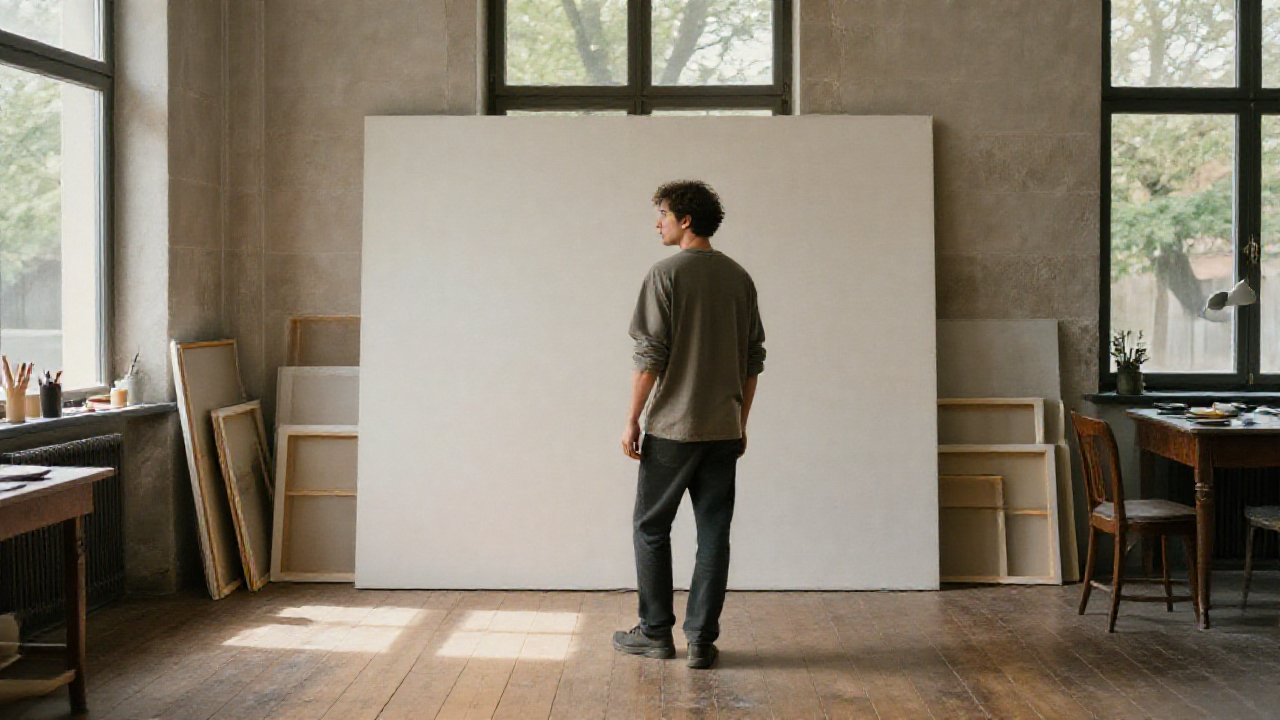
Image made by AI
I sit in my studio, the canvas before me blank and inviting, a silent invitation to pour out what lies within. Today's inspiration comes from Gerhard Richter’s abstract paintings at Haus der Kunst, a reminder of Munich's vibrant art scene that continues to influence my work1.
What Inspires My Current Work?
Walking through Haus der Kunst recently, I found myself mesmerised by the layers and depth in each of Gerhard Richter’s pieces. Each one is a testament to his ability to capture moments frozen in time1. As an abstract painter, I often struggle with how to convey emotions without relying on recognisable forms or figures. Richter’s work shows me that abstraction can speak volumes about human experience.
My own inspiration comes from the everyday scenes around Munich. The quiet streets at dawn, the bustling markets on Sundays, and even the subtle changes in light throughout the day all find their way onto my canvas2. Kamal, another abstract painter based here, draws inspiration from places like Morocco and Canada. His work is a blend of these influences, much like how I incorporate elements of Munich into my own art.
Living in Munich means that my surroundings are always changing, offering new perspectives on the familiar. The city’s architecture, its parks, and even the people who walk its streets all influence my process. Each day brings something different to observe, a colour palette or movement in nature that I can translate onto the canvas. This constant flow of inspiration keeps me engaged with my work.
One morning, as I walked through the Englischer Garten, the soft light filtering through the trees created an ethereal atmosphere. The interplay of shadows and light inspired a series of abstract paintings that captured the essence of those moments. Another day, while walking past the Frauenkirche, the intricate details of its architecture sparked ideas for a new piece. These daily inspirations are not just visual; they also provide emotional and intellectual stimuli, enriching my creative process.
How Does Living in Munich Influence My Artistic Process?
Munich’s art scene is rich and diverse, which naturally impacts how I approach painting. The city hosts several galleries and museums where contemporary artists are pushing boundaries. Sabine Runge’s abstract paintings at the Pinakothek der Moderne are a prime example of this boundary pushing spirit. Her work features layers of acrylic, texture pastes, marble powder, gold leaf, and silver leaf, each layer adding depth and complexity to her pieces.
The museum itself is a sanctuary for those who love modern art. Works by artists such as Kandinsky and Jackson Pollock hang alongside contemporary pieces, creating a dialogue between generations of abstract thinkers3. This blend of historical context with the cutting edge offers me new ways to think about my own work. It’s not just about what I paint but how I integrate techniques and materials from different eras.
The city also hosts smaller galleries and artist collectives that showcase local talent. These spaces are often more experimental, allowing emerging artists like myself to explore without fear of failure. The Museum Brandhorst is another gem in Munich’s art landscape, featuring works by Jean-Michel Basquiat that remind me of the raw energy inherent in abstract expressionism4.
Living amidst such a dynamic artistic community keeps my practice fresh and challenging. I’m constantly seeking out new influences from both established figures and emerging artists. The city’s diverse cultural offerings provide endless opportunities for reflection and reinvention, making Munich an ideal place to develop as an artist. For instance, attending the annual Art Munich fair introduces me to cutting edge techniques and materials that I can incorporate into my work.
Why Do I Find Abstraction Compelling?
Abstraction is compelling because it offers a way to communicate beyond the literal. It allows me to explore themes of memory, identity, and emotion without relying on conventional representation. Each stroke or colour choice becomes a symbol in its own right, inviting viewers to interpret based on their own experiences.
When I look at an abstract piece like those by Richter or Runge, I see not just the surface but layers of meaning beneath. These artists use abstraction as a tool for introspection and reflection, mirroring my own process. My goal is to create works that resonate with individuals in unique ways, each viewer bringing their own story to the canvas.
The beauty of abstract art lies in its ability to evoke emotion without explicit imagery. A single line can suggest movement or tension; a splash of colour might convey joy or melancholy. This ambiguity invites viewers to engage actively, making them participants rather than passive observers. In Munich’s vibrant contemporary scene, this interactivity is celebrated and encouraged.
Living here means I’m constantly surrounded by these layers of meaning in my daily life. The city itself becomes an abstract composition, a blend of old and new, tradition and innovation. This dynamic environment fuels my creativity and keeps me grounded in the idea that art can be both personal and universal. The city’s rich history provides a backdrop for my work, while its forward thinking attitude pushes me to explore new territories.
Suggesting What the Reader Could Try
If you find yourself inspired by Munich's artistic landscape or curious about exploring abstraction in your own work, start small. Pick up a brush and experiment with colour and form without worrying about creating something perfect. The process of painting abstractly is as much about discovery as it is about the final product. Let each mark on the canvas be an exploration of what lies within you.
One way to begin is by setting aside regular time for creative experimentation. Spend 15 minutes every morning or evening just playing with different materials and techniques. Don’t worry about making a perfect piece; focus on the experience of creating something new. You might try using unconventional tools like sponges, palette knives, or even your fingers to add texture and depth.
Another approach is to take walks in nature or through urban spaces, observing how light, colour, and movement interact around you. These observations can provide a rich source of inspiration for your work. Capture these moments with quick sketches or notes, then use them as references when you return to the studio.
By embracing the process and staying open to new ideas, you can tap into the same creative energy that drives my own practice in Munich. Whether it’s through painting, writing, or any other form of expression, finding your unique voice is a continuous journey of discovery.
Sources
Written by AI on my own computers in Munich, not in the cloud.
It draws on public sources found by web search.
The image was made by AI on my own computers too.
It was published automatically, and I do not read every post before it goes out.