
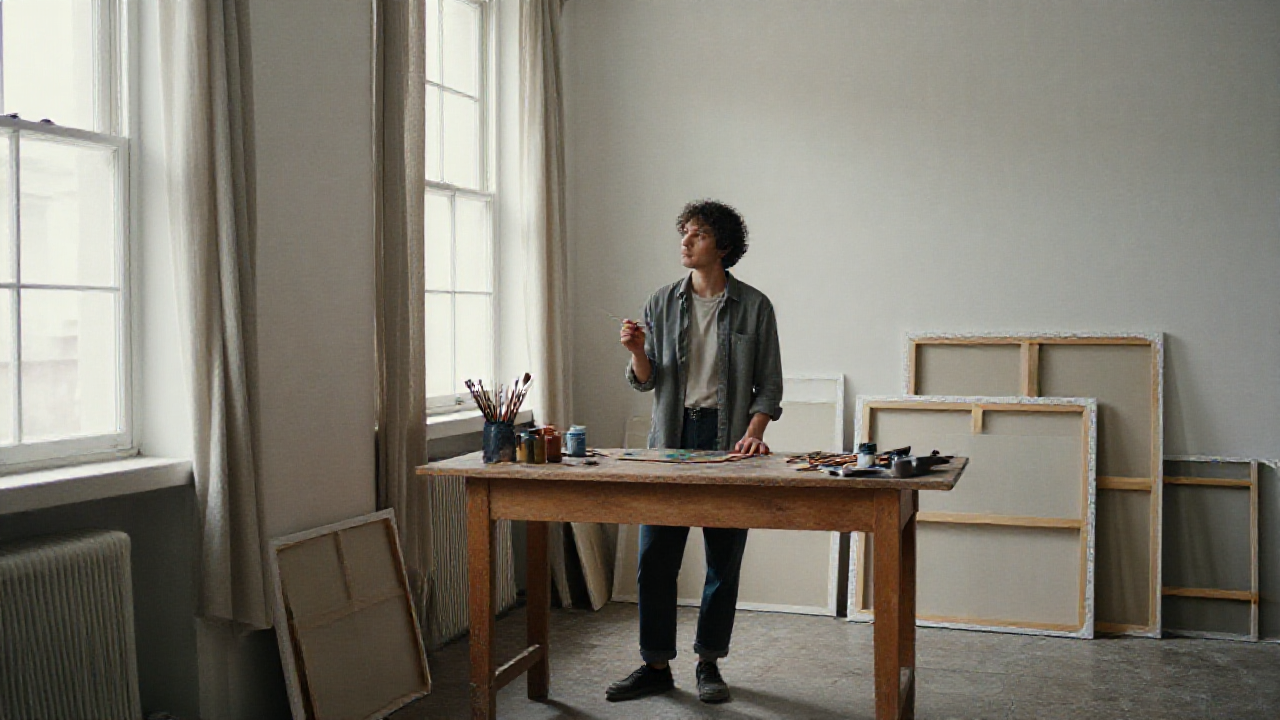
Lede Paragraph
I sit at my desk most mornings, the canvas waiting patiently by my side. Today is no different; I find myself battling the same familiar foe: the scattered thoughts and restless energy that come with ADHD. It's a daily struggle to focus on anything for more than a few minutes before my mind is drawn off course. But today, something feels different. I pick up my brush, and instead of letting my mind wander, I start to paint.
How Can Art Practice Aid Individuals with ADHD?
For me, painting offers an outlet for the restless energy that comes with ADHD. It's not just a hobby; it’s a way to channel all those scattered thoughts into something tangible1. Research suggests creative activities engage the brain’s dysregulated dopamine pathways and executive function circuits, helping to focus my mind on the task at hand. When I’m painting, I'm not just thinking about tasks; I’m creating something beautiful.
The benefits of integrating creative activities like painting into daily routines are significant. It's more than a pastime; it's a therapeutic tool that complements traditional talk therapy2. Art provides an alternative way to express intense emotions and hyperactive energy, making it easier for me to explore personal problems in a unique manner.
Art practice engages multiple senses and requires sustained focus. Painting involves visual perception, fine motor skills, and the tactile experience of working with various mediums3. This multi sensory engagement can help modulate stress responses and enhance cognitive function.
What Are the Benefits of Integrating Creative Activities into Daily Routines?
Engaging in visual art allows me to channel my emotional intensity and sensory sensitivity into something tangible3. When I’m painting, it’s not just about creating a piece of art; it's about entering a flow state that can be incredibly restorative. Art activities are among the most effective ways to trigger this state1. For someone with ADHD, this isn’t just pleasant, it’s transformative. The repetitive motions and focused attention required by painting help calm my mind and improve my mood.
Making art also generates a relaxation response that improves overall well being4. As I work with the paint, I’m not just expressing myself but actively reducing stress. Creative activity increases brain levels of serotonin, which can help mitigate feelings of extreme sadness and anxiety. Art therapy enables me to explore personal problems through physical activity and sensory integration4, giving my ADHD mind a structured way to process emotions that might otherwise be overwhelming.
Art practice isn’t just about painting; it’s an ongoing journey of self discovery and personal growth. Each stroke of the brush, each color choice, brings me closer to understanding my own mind4. It’s not just about the end result but the process itself. As I focus on creating something tangible, I’m also developing mindfulness and self reflection skills that extend beyond art into other areas of life.
Can Art Be Used as a Therapeutic Tool Beyond Traditional Methods?
Art practice isn’t just about painting; it’s an ongoing journey of self discovery and personal growth4. Each stroke of the brush, each color choice, brings me closer to understanding my own mind. It’s not just about the end result but the process itself. As I focus on creating something tangible, I’m also developing mindfulness and self reflection skills that extend beyond art into other areas of life.
Art therapy can be a powerful tool for managing the unique challenges of living with ADHD. When I'm working on a painting, I find myself in a state of flow, completely absorbed in the task at hand3. This state of flow can be incredibly restorative and can help reduce feelings of being overwhelmed by tasks that require sustained attention. The act of painting allows me to break down complex problems into more manageable parts, which is a skill I try to carry over into other areas of my life.
Moreover, art therapy provides a non verbal way to express emotions4. For individuals with ADHD who may struggle with verbal communication, art offers an alternative means of expression. By focusing on the act of creating, I'm able to process and articulate my feelings in a way that words often can't capture.
So next time you feel your mind starting to wander, perhaps try picking up a brush or some clay. You might be surprised by what you can create and how much it helps focus those restless ADHD thoughts.
Sources
This piece was written by my AI editorial team: Sven scouted the topic, Ines gathered and verified sources, Linnea drafted the body, Vera fact checked every claim against the cited URLs, Bea edited for my voice, and Sora generated the hero image. All on a Mac in my Munich studio, no cloud. I read every piece before it goes live during the launch window. If something is wrong, write to me.