Finding Focus: Strategies for Managing Attention in a Distracted World
5 October 2026
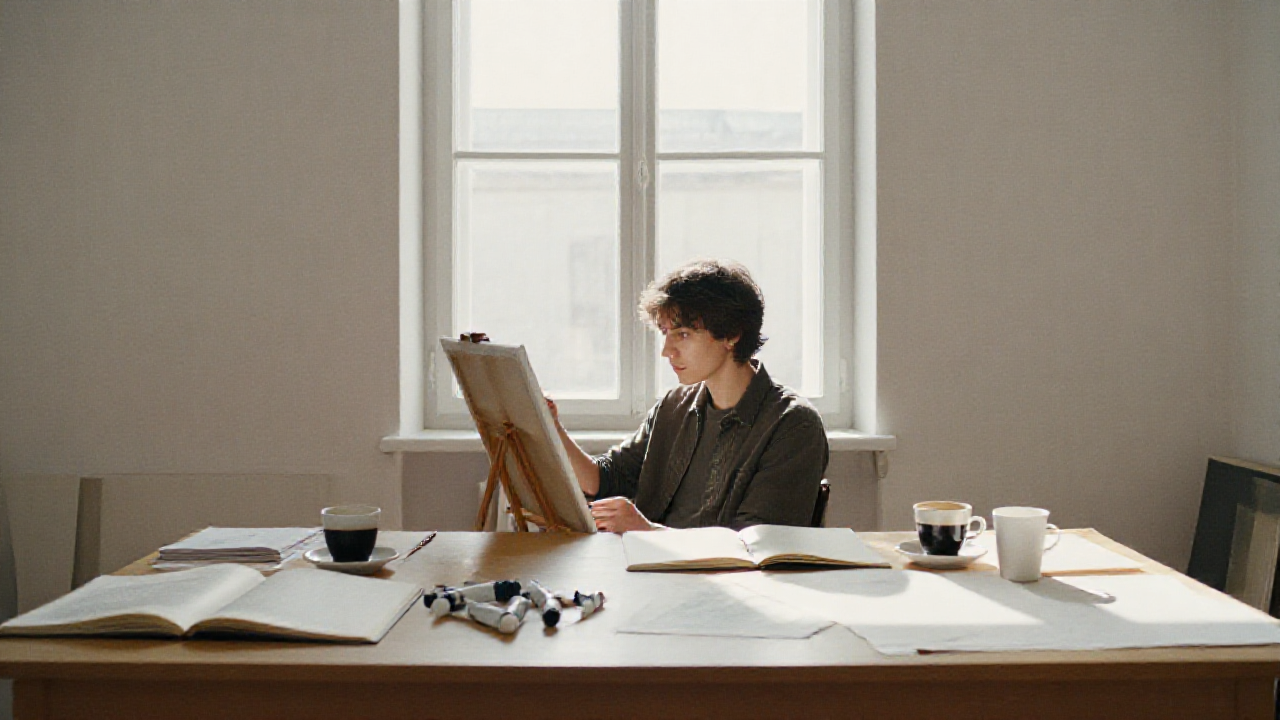
I sat at my desk today, surrounded by the usual clutter of paper and paint tubes. My eyes flickered between my canvas and the computer screen, trying to hold on to a single thought amidst the chaos of notifications. Focus seems like a luxury we can no longer afford.
Understanding the Myth of Multitasking
The first hurdle in finding focus is understanding that multitasking isn’t just inefficient; it’s impossible. When I try to juggle emails while painting, what I’m really doing is rapidly switching between tasks, a process known as task switching1. This constant toggling wears me out and diminishes my ability to concentrate on any one thing effectively.
Creating an environment that minimises these interruptions is crucial. My studio needs to be free from clutter and noise for me to truly focus2. When I tidy up my workspace, clear away unnecessary distractions, and set a quiet background, it’s easier to find the mental space needed to dive deep into work or art.
It’s also important to recognise how deeply ingrained multitasking has become in our daily lives. We often believe we’re being productive when, in fact, we’re spreading ourselves thin. For instance, I might think I’m catching up on emails while listening to a podcast, but the reality is that neither task gets my full attention or is completed efficiently.
To truly improve focus, it’s necessary to set boundaries and prioritise single tasking over multitasking. When I sit down to paint, for example, I make sure there are no other distractions pulling me away from my canvas. This means closing unnecessary tabs on my computer, silencing phone notifications, and even setting a timer to remind myself to stay focused.
Strategies for Enhancing Concentration
Setting clear goals is another key strategy in enhancing concentration. When I’m working on a painting, breaking down the larger project into smaller tasks makes each step more manageable3. Instead of thinking about the entire piece from start to finish, I focus on one element at a time, maybe starting with the background or laying out the initial sketch. This helps me avoid feeling overwhelmed and keeps my attention directed towards the task at hand.
Mindfulness also plays a significant role in improving focus4. Practising mindfulness means being fully present in the moment without getting lost in thoughts about past events or future worries. It’s like holding onto a single thread of thought amidst the swirling chaos around it. When I’m mindful, I can better regulate my emotions and stay on task5. For instance, if I start feeling anxious about a deadline, mindfulness helps me acknowledge the worry without letting it consume my focus.
Mindfulness can be practiced in various ways. One effective method is to set aside time each day for meditation or quiet reflection. Even just a few minutes of deep breathing and focusing on your breath can help centre you and improve concentration throughout the day. Another approach is to incorporate mindfulness into everyday activities, such as eating, walking, or painting.
Creating a consistent routine also helps enhance focus. Having a set schedule for when I paint or work on business tasks can train my brain to enter a state of concentration at specific times. This predictability reduces the cognitive load associated with decision making and allows me to dive straight into focused work.
Tailoring Techniques for ADHD
For those of us with ADHD, managing focus presents unique challenges. Our brains often struggle to filter out distractions and maintain sustained attention6. One significant issue is the lower levels of dopamine in our systems, which affects motivation and reward seeking behaviour6. This means that tasks can feel less rewarding and harder to start.
Breaking down large projects into smaller goals can help mitigate this by providing more immediate rewards as each mini goal is achieved3. For example, when I’m painting a complex scene, I might set out to complete just one section before taking a break. This incremental approach gives me the dopamine boost needed to keep going.
Taking purposeful breaks is equally important for ADHDers like myself3. While it may seem counterintuitive to pause work, these breaks allow my mind and body to rest, reducing exhaustion and preventing burnout. I often find that stepping away from the canvas for a short while can rejuvenate my focus when I return.
For me, finding what works best involves experimentation and self reflection. What might help one person with ADHD may not work for another. Some find that listening to music or using noise cancelling headphones helps them concentrate, while others prefer a completely silent environment.
Suggesting What Readers Could Try
Finding focus in today’s world is not about eliminating distractions entirely, it’s about managing them effectively. Start by creating a distraction free environment, both physically and digitally. Set clear goals and break down larger tasks into smaller, manageable steps. Practise mindfulness to stay present and regulate emotions better.
Try one of these strategies today and see how it impacts your ability to focus. It’s a small step towards reclaiming control over your time and energy in an increasingly chaotic world. For instance, you could start by setting aside 15 minutes each day to meditate or practice mindfulness. Or perhaps try blocking off an hour for deep work without any interruptions.
Remember, the journey towards better focus is ongoing and requires patience and persistence. By making small changes in your daily routine, you can gradually improve your ability to concentrate and be more productive.
Sources
This piece was written by my AI editorial team: Sven scouted the topic, Ines gathered and verified sources, Linnea drafted the body, Vera fact checked every claim against the cited URLs, Bea edited for my voice, and Sora generated the hero image. All on a Mac in my Munich studio, no cloud. I read every piece before it goes live during the launch window. If something is wrong, write to me.