
Minimalism and Creative Clarity: A Journey to Simplicity
7 August 2026
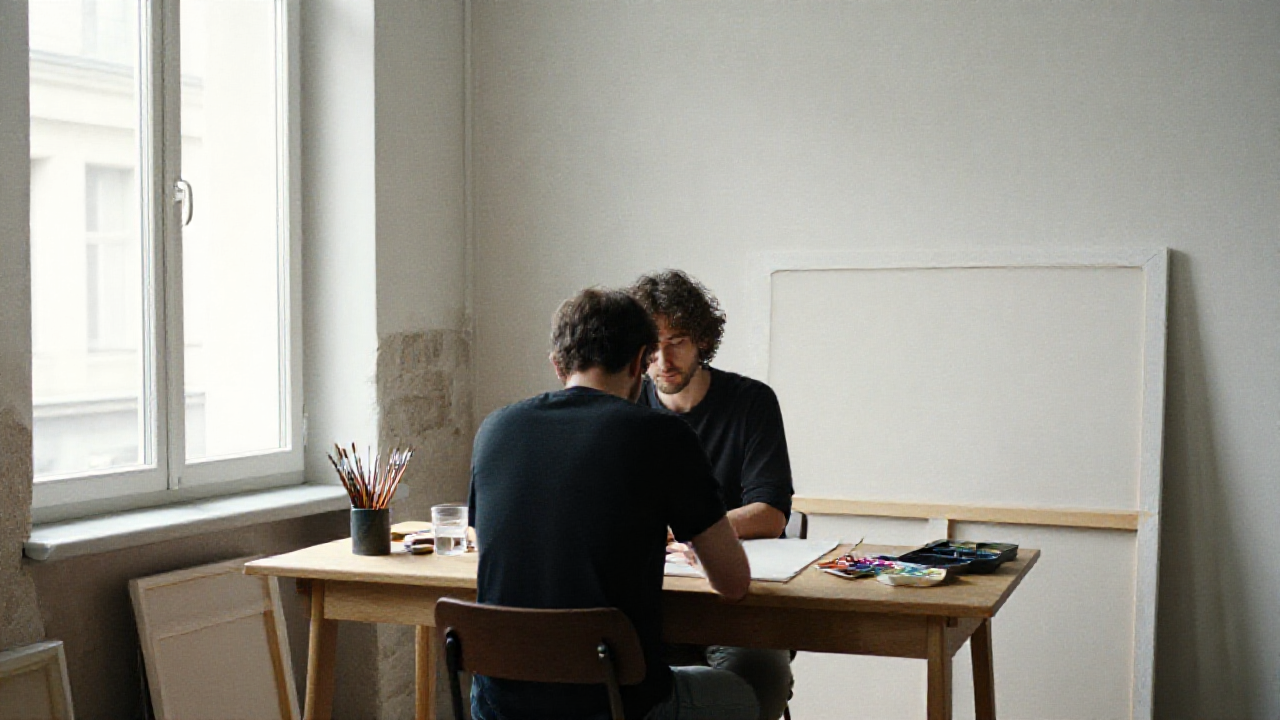
I sit at my desk most mornings and the canvas waits. Today, it's a blank one, a stark contrast to the chaotic mess that usually greets me. The urge to paint is strong, but so too is the need for clarity. As someone who has always struggled with ADHD, I find myself increasingly drawn to minimalism not just as an aesthetic choice, but as a way of life and creative practice.
Minimalism in Creative Processes
Minimalism isn't about emptiness or lack; it's about communicating ideas and creating experiences in the simplest way possible.1 In my studio, this means removing distractions, focusing on what truly matters, and stripping away anything that doesn’t serve a purpose. It’s like editing down a painting to its essential elements, every shape, colour, line must have a reason for being there.
When I sit down to paint, the goal isn't just to cover every inch of the canvas but to capture the essence of a moment or emotion. This approach forces me to be deliberate and intentional with my brushstrokes, ensuring that each element serves a purpose. The process becomes meditative, allowing me to channel my energy into what I truly want to express.
Minimalism in creativity is about removing distractions and focusing on what truly matters. It’s not just about the absence of clutter; it's also about the presence of clarity. By simplifying my tools and environment, I can devote more attention to the act of creation itself. This focus often leads to a more profound sense of satisfaction, knowing that each piece is crafted with care and purpose.
Simplifying Life Without Sacrificing Creativity
Simplifying my life has allowed me to focus more on the quality and impact of each piece, rather than the sheer volume of work I produce. By focusing on fewer elements, you can concentrate on the quality and impact of each one.2 This approach has led to more focused and powerful work. Instead of rushing through multiple paintings in a day, I find myself spending hours perfecting just one piece.
ADHD can make this process challenging. The constant need for stimulation and the tendency to switch between tasks can be overwhelming. However, minimalism offers a way to manage these impulses by creating an environment where focus is easier to achieve. It's like setting up my studio with only the essentials, my brushes, canvas, some watercolours, that allow me to work without distraction.
In the past, I would often find myself getting sidetracked by unnecessary elements in my workspace. Clutter and excess can be overwhelming for someone with ADHD, making it difficult to maintain focus. By streamlining my environment, I’ve learned to embrace a more disciplined approach to painting. Each piece now feels like a deliberate act of creation, free from the distractions that once plagued me.
Benefits for Mental Health
Minimalism can lead to more focused and powerful work, but it also offers significant benefits for mental health.2 By stripping away excess, I find myself less stressed and more present in the moment. The clarity that comes from a minimalist approach extends beyond my studio; it seeps into every aspect of my life.
Untangling the connection between dopamine and ADHD has been a journey. Stimulants have long been the go to treatment, but as research continues to evolve, we're learning more about how these drugs impact our brains in both short and long term ways. A new review of ADHD treatments, drawing on over 200 meta analyses, cuts through years of mixed messaging and hype.3 This review offers clearer, evidence based insights that can help both individuals with ADHD and their clinicians make better decisions.
For me, understanding the role of dopamine in my brain has been crucial. The constant need for stimulation is a hallmark of ADHD, but finding ways to manage it through minimalism has helped. By focusing on fewer tasks and creating an environment that promotes clarity, I can reduce the overwhelming sense of needing constant input. This approach allows me to find balance and peace, even in the midst of creative chaos.
A Simpler Life
Adopting a minimalist lifestyle has allowed me to live more intentionally. Each decision is weighed carefully, what I buy, what I keep, what I let go. It's not about denying myself things; it’s about choosing quality over quantity. The result? A clearer mind and a more focused creative process.
As I look at the blank canvas before me, I see not an empty space but an opportunity to create something meaningful. Minimalism isn’t just a style or trend, it’s a way of life that helps me stay grounded and present in my work and personal life. By embracing simplicity, I’ve found a new level of clarity and creativity.
So, if you’re looking for ways to simplify your own life without sacrificing creativity, consider the minimalist approach. It might just be what you need to find more focus and joy in your daily routine. Embrace the space between ideas, the quiet moments that allow you to connect with yourself and your craft. The blank canvas is waiting; let’s fill it with intention and purpose.
Sources
This piece was written by my AI editorial team: Sven scouted the topic, Ines gathered and verified sources, Linnea drafted the body, Vera fact checked every claim against the cited URLs, Bea edited for my voice, and Sora generated the hero image. All on a Mac in my Munich studio, no cloud. I read every piece before it goes live during the launch window. If something is wrong, write to me.