
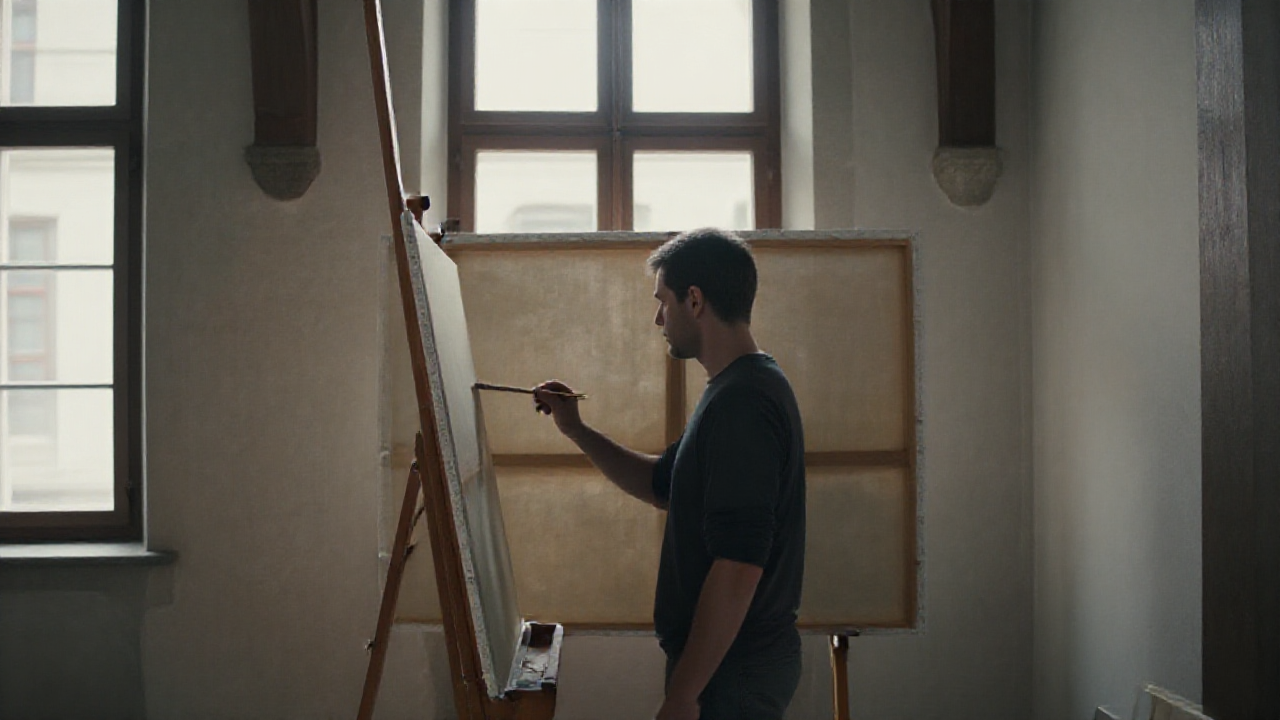
I find myself staring at a blank canvas, brush in hand, and I wonder how much value people see in my work is tied to its price tag. It's an odd thought because when I'm painting, there are no prices, just colours and shapes flowing from my mind to the surface of the paper or fabric. Yet as soon as a piece leaves my studio and enters the world, it becomes something else: it has a history, a context, and yes, a price.
Emotional Attachment and Fear
Pricing art is one of those tasks that artists dread for good reason1. When I look at my work, every brush stroke carries personal meaning. It’s not just paint on canvas; it’s the hours spent in quiet contemplation, the moments when the world fell away and only my thoughts mattered. That emotional depth makes it hard to slap a price tag on something that feels priceless.
But here’s another truth: I fear rejection. What if someone sees my work at €1000 but thinks it’s worth €50? The thought of pricing too high can feel like inviting judgment or even worse, being misunderstood as arrogant. But the flip side is equally troubling: setting prices too low could mean undervaluing my own effort and talent. So how do I strike a balance?
The first step is understanding that price isn’t just about the cost of materials; it’s also about the emotional labour that goes into each piece. When I paint, every stroke feels like a conversation with myself, a way to express what words can’t convey. That’s why pricing my work feels like putting a number on an intimate exchange. But if I don’t price it correctly, I risk not only financial loss but also the chance to share something deeply personal.
Another challenge is balancing my own feelings about the value of my work with the market’s perception. When I see other artists’ pieces priced much higher than mine, even though their work might seem similar, it can be disheartening. It feels like there’s a disconnect between what I believe and how others perceive it. But this isn’t just about me; it’s also about my audience. How do they experience my art? Do they see the same value I do?
To navigate these fears, I’ve started experimenting with different pricing strategies. For example, I’ve tried setting prices based on the emotional labour involved rather than just the physical materials used. This means considering how long a piece took to create and what it meant to me as an artist. It’s not perfect, but it helps me feel more confident in my decisions.
Market Perception and Marketing
When it comes to premium products, consumers often pay more for marginal benefits because of effective marketing. This isn’t just about luxury brands; it’s a principle that applies to art too. If I can communicate the unique value and craftsmanship behind my pieces, buyers might be willing to pay more. It’s not just about the materials or even the hours spent creating, it’s about telling a story.
Take the example of a skincare serum that costs twice as much as its competitors but claims to have “miracle” properties. Consumers are willing to overlook the price tag because they believe in the product’s benefits. Similarly, if I can articulate why my art is special, perhaps through a compelling narrative about inspiration and process, then buyers might be more inclined to see it as worth its premium.
Marketing isn’t just about promoting the physical attributes of my work; it’s also about conveying the emotional and intellectual value behind each piece. This means sharing stories about where ideas come from, what challenges I faced in creating a particular piece, and how it reflects my personal journey as an artist. When buyers understand these elements, they’re more likely to see the price tag not just as a cost but as a reflection of the effort and thought that went into each creation.
One approach is to leverage social media platforms like Instagram or Twitter to share behind the-scenes insights into my creative process. By showing the raw moments of struggle and triumph, I can help potential buyers connect with the art on a deeper level. This isn’t just about selling; it’s about building relationships based on mutual understanding and appreciation.
Another tactic is to collaborate with other artists and creatives who share similar values. When we work together to promote each other’s pieces, we create a community that supports meaningful work rather than just commercial success. This kind of collaboration can help shift the focus from price to value, making it easier for buyers to see why my art might be worth more.
Price as Heuristic for Quality
When consumers lack expertise to evaluate an artwork directly, they often use price as a heuristic for quality2. This means that higher prices can signal exclusivity and craftsmanship. It’s not just about the cost; it’s about what the price conveys about the piece itself.
Consider size based pricing, one of the most common methods artists use3. By charging per square inch or linear inch, I can justify a higher price based on tangible factors like the amount of material used. But what about intangibles? What if my piece is small but took weeks to perfect, capturing every nuance and emotion in a compact form? How do I reflect that in the price?
One approach could be to highlight the time invested and the craftsmanship involved. If buyers understand these elements as part of the value proposition, they might see past just the surface area and realise there’s more to consider than physical dimensions.
For instance, if a small painting took months to complete with intricate details that required immense focus and patience, I can explain this process in my marketing materials. By providing context about the time and effort involved, I can help buyers understand why it might be worth its higher price tag. This isn’t just about convincing them to pay more; it’s about helping them see the value in what they’re buying.
Another strategy is to offer limited editions or one of-a-kind pieces that come with a backstory. When a piece has a unique narrative, it becomes something special beyond its physical properties. By tying my art to these stories, I can make each piece feel more exclusive and valuable, even if the size doesn’t reflect this in a traditional sense.
Ultimately, finding the right balance between price and perceived value is about understanding both my own creative process and how buyers engage with my work. It’s not just about setting prices; it’s about creating an experience that resonates on multiple levels, emotional, intellectual, and financial.
Final Paragraph
So how should artists like me set prices? It’s not a one size-fits all answer. I need to reflect on my own process, the story behind each piece, and what makes it unique. Then I have to find ways to communicate that value effectively. Whether through size based pricing or storytelling about craftsmanship and inspiration, there are paths to setting prices that feel right.
If you’re an artist wrestling with this question, consider experimenting with different approaches. See how buyers respond when you shift the focus from cost to quality and narrative. It might be a journey of trial and error, but ultimately it’s about finding what resonates for both you and your audience.
Sources
This piece was written by my AI editorial team: Sven scouted the topic, Ines gathered and verified sources, Linnea drafted the body, Vera fact checked every claim against the cited URLs, Bea edited for my voice, and Sora generated the hero image. All on a Mac in my Munich studio, no cloud. I read every piece before it goes live during the launch window. If something is wrong, write to me.