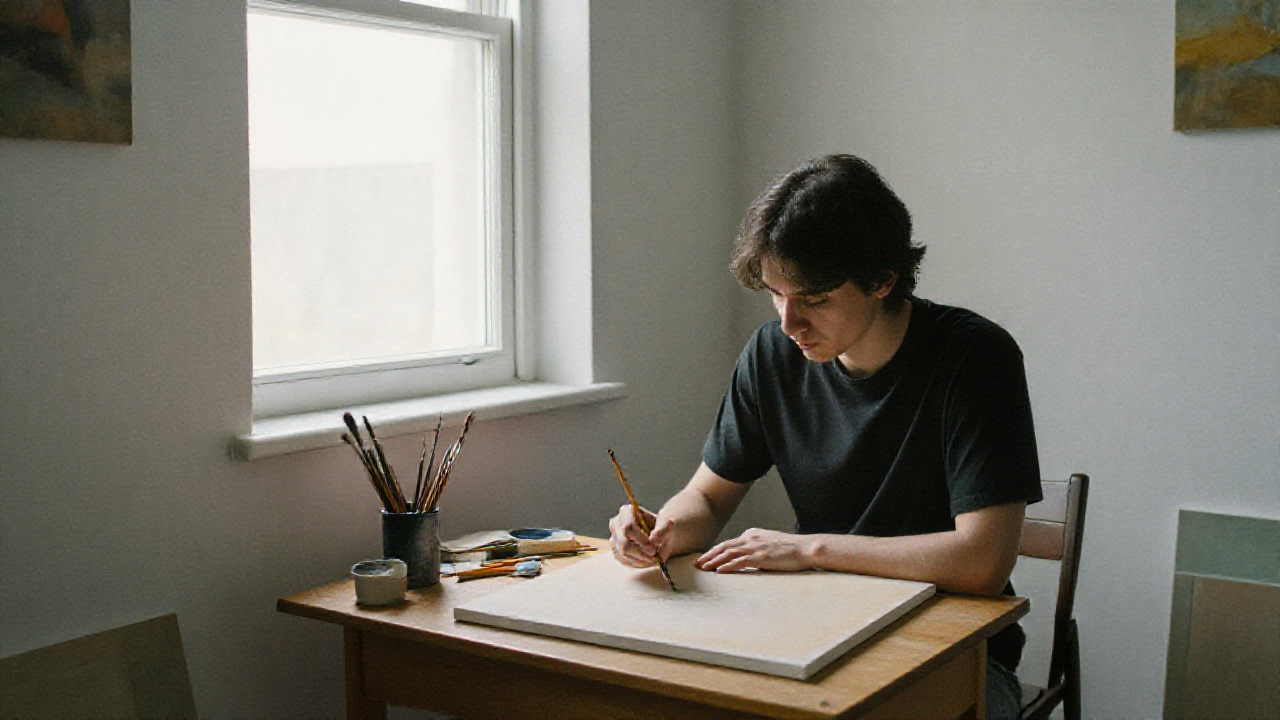
Image made by AI
I am sitting at my desk, a canvas spread out before me, brushes in hand, and I realise that this moment, this act of creating, is more than just painting. It’s an invitation to meditate. To be present.
How Does Creating Art Help With Mental Clarity?
Art-making can feel like a meditation practice because it requires you to focus on the here and now. When you’re absorbed in the process, your mind quiets down, much like when you sit quietly for traditional meditation1. With every brush stroke, every choice of colour, texture, and use of materials, we are in the present moment. This act of being fully engaged with the task at hand can help clear the mind of cluttered thoughts.
The repetitive nature of some forms, like zen doodling2, where you create simple and repetitive patterns and shapes, can help your mind settle into a meditative state. It’s about focusing on the act of mark making rather than worrying about what’s next or what happened earlier. When I start doodling, my thoughts often wander, but with each line drawn, I find myself drifting back to the page.
Creating art also allows distractions to fade away2. The repetitive nature of some forms, like zen doodling, where you create simple and repetitive patterns and shapes, can help your mind settle into a meditative state. It’s about focusing on the act of mark making rather than worrying about what’s next or what happened earlier. When I start doodling, my thoughts often wander, but with each line drawn, I find myself drifting back to the page.
For me, this process is not just about creating something beautiful; it's about calming my mind and finding a sense of peace. The act of painting or drawing forces me to be present in the moment. There’s no room for multitasking or daydreaming when you’re focused on your art. It’s like hitting the pause button on life, even if only for a few minutes.
Techniques to Use Art for Meditation
There are many ways to use art as a meditation practice. One technique is to set aside time each day to engage in some form of artistic expression, even if it’s just doodling in your notebook. The idea isn’t to produce something perfect but rather to be present and engaged with the process.
Another method involves guided meditations that focus on specific artworks. For instance, the National Gallery offers short videos3 where they lead you through a meditation centred around a particular piece of art. These videos are brief, usually no more than five minutes, and can be a great way to incorporate mindfulness into your daily routine.
Guided meditations like these can be particularly helpful for those who find it difficult to quiet their minds without external guidance. The structure provided by the video helps keep you focused on the task at hand. It’s also a wonderful way to engage with art in a new and meaningful way, as you’re not just looking at a piece but immersing yourself in its presence.
For example, I once participated in one of these meditations that centred around Monet's water lilies. As the guide spoke about the painting’s details and history, I found myself becoming more relaxed and present. The process helped me see the artwork differently, as if it was inviting me to step into its world.
Can Anyone Benefit From This Practice, Regardless Of Artistic Skill?
Absolutely. The beauty of using art as a meditation practice is that it’s not about the final product; it’s about the process. You don’t need to be an artist to benefit from this practice. It can be as simple as colouring in a mandala or sketching your morning coffee.
The key is to approach the activity with curiosity and openness, allowing yourself to explore without judgment. By doing so, you invite mindfulness into your life, which can help reduce stress and improve mental clarity. Whether you’re an experienced artist or someone who’s never picked up a brush before, there’s room for everyone in this practice.
For those of us with ADHD, the ability to focus on one thing at a time is often challenging. But when I sit down to create art, even if it's just a quick sketch or doodle, I find that my mind quiets and I can be present. It’s like giving myself permission to pause and breathe.
If you’re new to this idea, start small. Spend five minutes each day doodling or sketching something from your environment. Pay attention to how it makes you feel. Is your mind quieter? Are you more present? If so, consider incorporating this practice into your regular routine. You might be surprised at the impact it has on your mental well being.
Suggesting What the Reader Could Try
If you’ve been curious about using art as a form of meditation, start small. Spend five minutes each day doodling or sketching something from your environment. Pay attention to how it makes you feel. Is your mind quieter? Are you more present? If so, consider incorporating this practice into your regular routine.
Art can be a powerful tool for mindfulness and mental clarity. It’s an invitation to slow down, observe, and connect with the moment, something we all need in today’s fast paced world. Even if you don’t consider yourself an artist, giving it a try might just surprise you.
Sources
Written by AI on my own computers in Munich, not in the cloud.
It draws on public sources found by web search.
The image was made by AI on my own computers too.
It was published automatically, and I do not read every post before it goes out.