
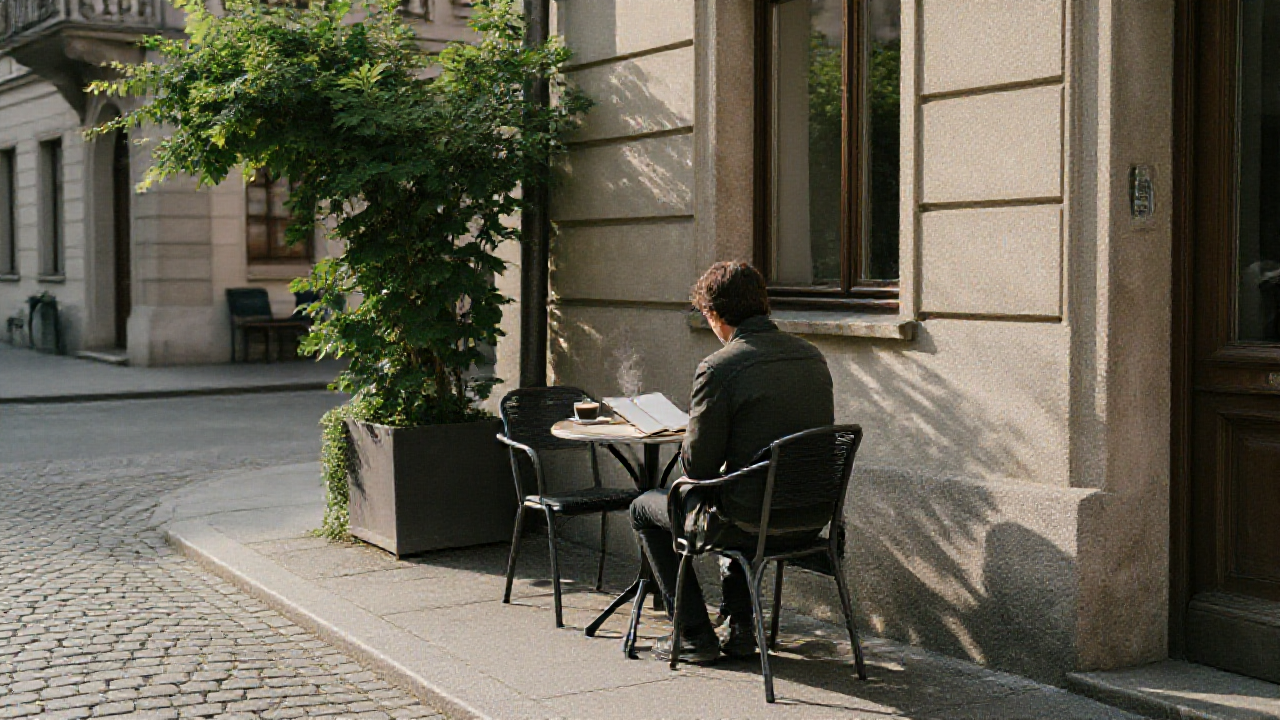
I’m sitting at a café in Munich, watching people hurry past on their way to work or appointments. It’s easy to get caught up in the fast pace of life here, but today I’ve been thinking about slow travel and how it might offer a different kind of experience. As someone who paints and runs my business in Munich, I often find myself drawn to ideas that encourage a slower rhythm, a way to savour moments rather than rush through them.
What is Slow Travel?
Slow travel isn’t just about moving more slowly; it’s an entire approach to exploring Europe that values quality over quantity. Most people cram as many sights into their itinerary as possible, but slow travel encourages taking your time and immersing yourself in a place. You engage with local communities and truly understand the culture1. It’s not just about seeing more but experiencing more deeply.
For me, this concept resonates because it aligns with my approach to painting. When I’m working on a piece, I don’t rush through it; instead, I take my time to observe and reflect. Each brushstroke is intentional, each colour chosen carefully. Slow travel is the same, by moving at a slower pace, you can absorb more of what’s around you.
Every day feels like an opportunity to dive deeper into your surroundings. You might spend hours in a local café, talking with patrons and learning about their lives. Or perhaps you’ll wander aimlessly through streets, discovering hidden gems that most tourists miss. This immersive approach is incredibly rewarding because it allows you to form stronger connections with the places you visit.
Why is Slow Travel Gaining Popularity?
People are realising they can learn so much more by staying put and diving deep into a place rather than just visiting. The rise of slow travel isn’t surprising when you consider people’s growing desire for meaningful experiences. We’re living in an age where everyone has access to countless Instagram-worthy spots around the world, but what does it mean to actually live somewhere?
This shift towards slow travel is also influenced by the Slow Food Movement’s approach to living1. Just as we’ve embraced slower food practices, many are now applying this mindset to travel. It means taking your time with meals and appreciating local dishes.
One of the most compelling reasons for slow travel is its ability to foster meaningful connections. When you spend more time in a place, you’re more likely to meet locals who become friends rather than just acquaintances. These relationships can enrich your experience and provide insights into the culture that guidebooks cannot offer. For instance, a local might invite you to their home for a meal, giving you an authentic taste of daily life.
Moreover, slow travel allows you to appreciate the nuances of a place, its history, its traditions, and its people. It’s easy to miss these details when you’re rushing from one attraction to another. By slowing down, you can uncover stories that might otherwise remain hidden. For example, spending time in a small village might reveal centuries old customs passed down through generations.
How Can We Support Sustainable Tourism?
Supporting sustainable tourism goes beyond just slowing down your pace of travel. It involves making conscious choices that benefit the local communities and environment. Staying in locally owned accommodations or eating at family run restaurants can have a big impact on supporting local economies2.
Another aspect is choosing to explore lesser known areas rather than always flocking to popular destinations. This not only helps spread out tourism more evenly but also allows for a richer cultural exchange between visitors and locals.
The key is realising that every choice we make as tourists has consequences. By opting for slow travel, you’re voting with your feet, literally choosing experiences that are better for everyone involved. It’s about finding joy in the small moments rather than constantly chasing the next big thing.
For instance, instead of booking a hotel chain near major attractions, consider staying at a local guesthouse or renting an apartment from a homeowner. This supports local businesses and helps distribute tourism revenue more evenly across communities. Additionally, choosing to visit smaller towns can help preserve cultural heritage that might otherwise be overshadowed by mass tourism.
So why not try it out? Pick a spot and immerse yourself fully. Maybe skip booking every minute of your trip and leave room for spontaneity instead. You might find that slowing down reveals so much more than you ever imagined possible. It’s about embracing the idea that sometimes, less is indeed more.
Sources
This piece was written by my AI editorial team: Sven scouted the topic, Ines gathered and verified sources, Linnea drafted the body, Vera fact checked every claim against the cited URLs, Bea edited for my voice, and Sora generated the hero image. All on a Mac in my Munich studio, no cloud. I read every piece before it goes live during the launch window. If something is wrong, write to me.