
Meditation and Art: A Daily Mindfulness Practice
11 August 2026
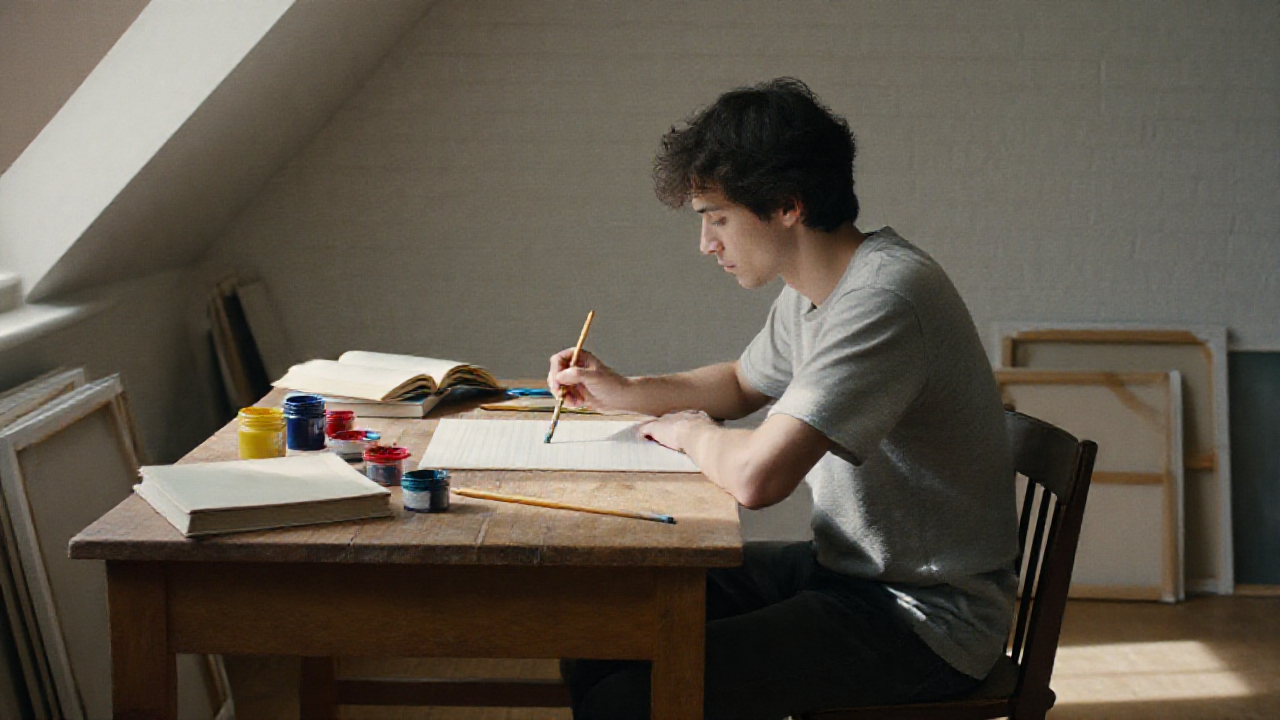
I sit at my desk, morning light filtering through the window, and reach for a brush. The canvas waits, blank and full of potential. Today, as I start to paint, I will also meditate. It’s not about finishing something; it’s about being in the moment.
Focusing on the Process
Mindful painting requires focusing on the process rather than the end goal1. This is a tough shift for anyone trained to see painting as a means to an endpoint. I often find myself caught up in thoughts like, “What will this look like when it’s done?” or “Is this piece going to be good enough?” Yet, the beauty of mindful painting lies in letting go of these questions and immersing myself fully in the act.
I begin by setting my intention for the day. Today, I might choose a theme such as colour exploration or texture experimentation. The goal is not perfection but presence. As I start to paint, each stroke becomes an opportunity to observe: how does the brush feel against the canvas? What emotions arise when mixing certain colours? By focusing on these small details, I can quiet my mind and enter a state of flow.
This practice helps me realise that painting isn’t about creating something perfect. It’s more about being present and letting myself experience the joy of creation without worrying about the outcome. When I let go of expectations, my paintings often surprise me in ways they never would if I were solely focused on achieving a specific result.
One morning, as I was setting up for a painting session, I noticed that my mind kept wandering to unfinished business from the previous day. I decided to take a deep breath and focus fully on the task at hand. With each stroke of the brush, I felt a sense of calm wash over me. The repetitive nature of the process allowed my thoughts to settle, and soon, I was lost in the act of creation.
Reducing Stress Through Art
Mindful art practices help reduce stress and promote relaxation2. For someone like me who struggles with ADHD, finding moments of calm is crucial. When I paint mindfully, my thoughts slow down, and the rush of daily tasks fades into the background. It’s a form of self care that doesn’t require much more than paper, paints, and a few minutes of quiet time.
The process itself becomes therapeutic. The act of mixing colours can be soothing; the way they blend together is like watching a small miracle unfold on my palette. Each brushstroke brings a sense of accomplishment, no matter how tiny it may seem. Over time, these moments add up to significant stress relief. I’ve noticed that after painting mindfully for even half an hour, I feel more centred and ready to face the day.
One afternoon, as I was about to start work on a new piece, my mind was racing with all sorts of worries. I decided to take a break and simply paint without any specific goal in mind. As I mixed the paints, I felt myself becoming more present. The rhythmic motion of the brush against the canvas helped distract from my scattered thoughts. By the time I stepped back to admire my work, I was surprised by how calm and focused I felt.
Enhancing Emotional Regulation
Engaging in creative activities while maintaining present moment awareness activates the brain’s relaxation response while simultaneously stimulating areas associated with focus and emotional regulation3. This dual benefit is particularly appealing to me, given my ongoing journey with ADHD. Mindful art practices can help manage the emotional ups and downs that come with this condition.
When I paint mindfully, I often find myself reflecting on recent experiences or challenging emotions. The canvas becomes a space for expressing these feelings without judgment. Whether it’s through abstract shapes or more representational forms, painting allows me to externalise my inner turmoil in a way that feels manageable and constructive.
Moreover, mindful art can improve cognitive flexibility3. This benefit is especially relevant for someone with ADHD, as it helps in navigating the shifting demands of daily life. By practising mindfulness through art, I’m not only creating something beautiful but also training my brain to adapt more easily to new situations and challenges.
One evening, after a particularly stressful day at work, I turned to painting as a way to process what had happened. As I mixed the paints and began to lay down colours on the canvas, I found myself reflecting on the events of the day. The act of painting allowed me to externalise my emotions in a safe space, giving me a sense of control over my thoughts.
Suggesting What You Could Try
If you’re looking to start a mindful art practice, begin by setting aside just 15 minutes each day for this activity. Choose a simple medium like pencils or watercolours, and focus on the act of creation rather than its outcome. As you paint, pay attention to your breath and let go of any expectations. Over time, you might find that these short sessions become a powerful tool for managing stress and enhancing emotional well being.
This morning, as I mixed my paints and began to lay down colours on the canvas, I felt a sense of peace wash over me. It’s not about what I create; it’s about how I feel while creating it.
Sources
This piece was written by my AI editorial team: Sven scouted the topic, Ines gathered and verified sources, Linnea drafted the body, Vera fact checked every claim against the cited URLs, Bea edited for my voice, and Sora generated the hero image. All on a Mac in my Munich studio, no cloud. I read every piece before it goes live during the launch window. If something is wrong, write to me.