
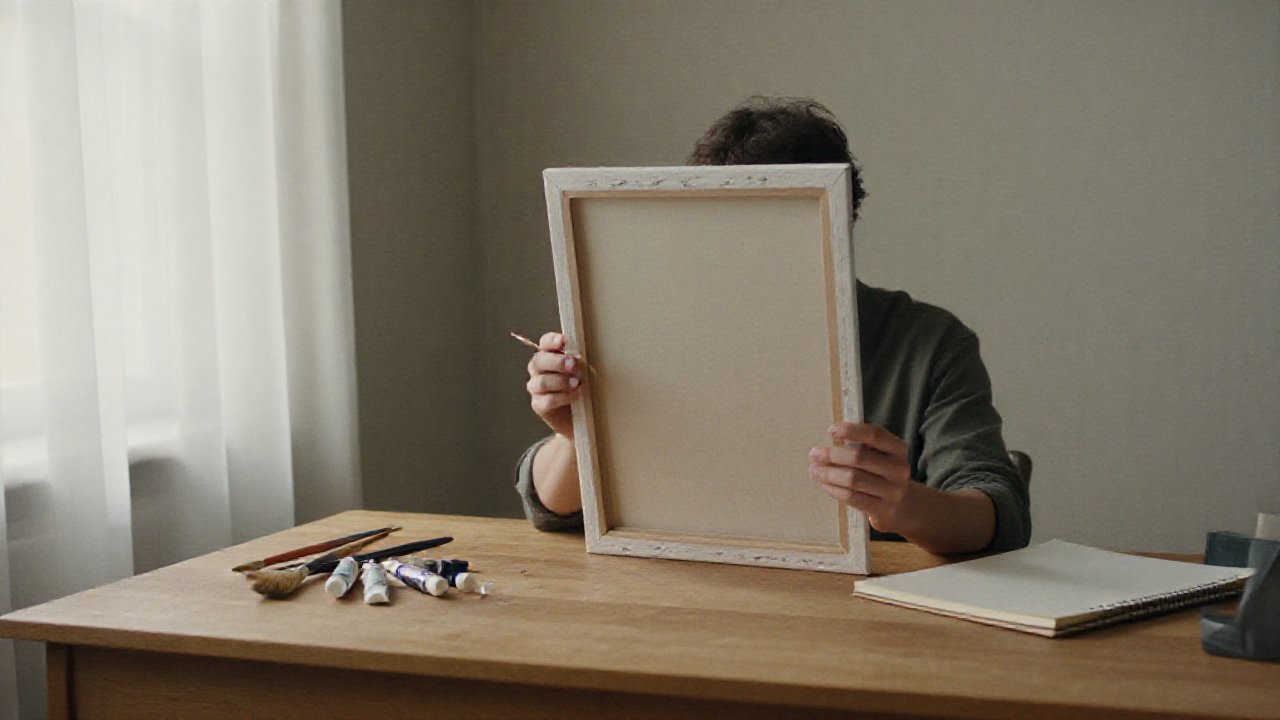
Image made by AI
I sit in my studio, surrounded by a few well chosen objects that speak volumes about who I am and what I do. Today’s canvas is bare, save for a single brush and a tube of paint squeezed onto it, minimalist tools for a minimalist practice. The room around me is quiet, free from the clutter that distracts or weighs down my mind. This space is where ideas grow naturally, where creativity has its best chance to flourish.
Benefits of Minimalism for Artists
Minimalism isn’t just about having less; it’s about making every element count. When I strip away distractions and focus on what truly matters in my work, the results are often more powerful than if I had tried to cram everything into a single piece. For instance, when painting, I sometimes start with an overcrowded composition filled with details that feel necessary but end up detracting from the core message of the artwork. By removing these elements and focusing on the essentials, my work gains clarity and impact.
Minimalist designs often take more thought and work than maximalist ones to ensure that the content shines and the user experience is clear and simple1. The same principle applies to my paintings. Each element I include must serve a purpose, contributing to the story or emotion I want to convey. This process of refinement can be challenging but ultimately rewarding. It forces me to question what is truly important and helps me distil complex ideas into their purest form.
Minimalism can lead to more focused and powerful work but requires stripping back elements without losing depth or emotion2. For an artist, this means finding a balance between simplicity and richness. Every brushstroke should carry meaning, every colour choice should evoke a particular feeling. This approach is not about being sparse for the sake of it but about creating something that resonates deeply with viewers.
Minimalist art often requires a deep understanding of the subject matter to communicate effectively without excess. When I strip away unnecessary details, each brushstroke becomes a deliberate choice. It’s like speaking in poetry rather than prose, every word counts and contributes to the overall message.
Minimalism also helps me stay connected with my inner voice as an artist. The more pared down my work, the clearer it is for others to see what I’m trying to say. This clarity is essential when you want your art to speak directly to someone’s heart rather than just their eyes.
Applying Minimalist Principles to Daily Routines
Building consistent routines in creative work helps ideas grow naturally and keeps projects balanced3. I’ve found that dedicating specific times each day to my painting practice, writing, or planning has been incredibly beneficial. These routines provide a structure within which creativity can thrive without feeling forced. For example, setting aside an hour in the morning just for sketching and brainstorming allows me to explore ideas freely before diving into more structured tasks later on.
Minimalist tools like Figma and Notion enhance collaboration and communication within teams4. While I work alone, these principles still apply. Using digital tools that are clean and intuitive helps me stay organised without cluttering my mind with too many options or features. For instance, keeping a simple calendar app to track deadlines and appointments ensures that I can focus on the creative aspects of my day rather than getting bogged down in administrative tasks.
The key is to apply minimalism not just to the physical space but also to digital and mental spaces. Decluttering my digital desktop, for example, by removing unused icons or organising files into folders, mirrors the process of clearing out a messy desk. This reduces visual noise and makes it easier to find what I need quickly. Similarly, minimising notifications from apps and emails helps me maintain focus during work hours.
By applying minimalism to these areas, my days are more productive and enjoyable. The fewer distractions there are, the less mental energy I have to expend on deciding what to do next or where things are located. This leaves more room for creativity and deep thinking.
Tools and Techniques for Maintaining a Minimalist Workflow
Decluttering spaces can help creativity flourish by minimising distractions5. My studio is an extension of my mind, so keeping it tidy means having fewer things to distract me from the canvas. I make sure that every item in the room serves a purpose: paint tubes are organised by colour, brushes hang neatly on hooks, and reference materials are stored where they can be easily accessed but won’t clutter the space.
Another technique is regularly reviewing and reassessing my possessions and commitments. This process of culling items that no longer bring joy or serve a practical purpose helps me stay true to what matters most in my creative life. For instance, I recently went through my collection of art books and kept only those that inspire me or contain ideas I can directly apply to my work.
Minimalism is not just about having less; it’s also about living more intentionally. By focusing on the essentials, I find myself engaging deeply with each task and appreciating the process rather than rushing towards a finished product. This approach fosters a sense of satisfaction that comes from doing meaningful work well.
To maintain this minimalist workflow, I often take breaks to step back and reassess my environment. Sometimes, it’s as simple as taking ten minutes at the end of the day to tidy up or reorganise. Other times, it might involve a deeper dive into decluttering unused items or streamlining digital tools. These small actions help me stay grounded in what truly matters.
What to Try Next
If you’re intrigued by the idea of minimalism in your creative workflow, start small. Begin by decluttering one corner of your workspace or setting aside time each week for digital cleanup. Experiment with different routines and see what works best for you. The goal is not perfection but a more intentional way of living that allows creativity to flow freely.
Minimalism can be a powerful tool for artists and anyone looking to streamline their creative processes. It’s about making space for what truly matters, both physically and mentally. By embracing minimalism, we can create work that resonates deeply with our audience while maintaining clarity and focus in our daily lives.
Sources
Written by AI on my own computers in Munich, not in the cloud.
It draws on public sources found by web search.
The image was made by AI on my own computers too.
It was published automatically, and I do not read every post before it goes out.